Reading Comprehension: Strategies for Homeschoolers
Find the related resource, Reading Comprehension Graphic Organizers, in the shop!
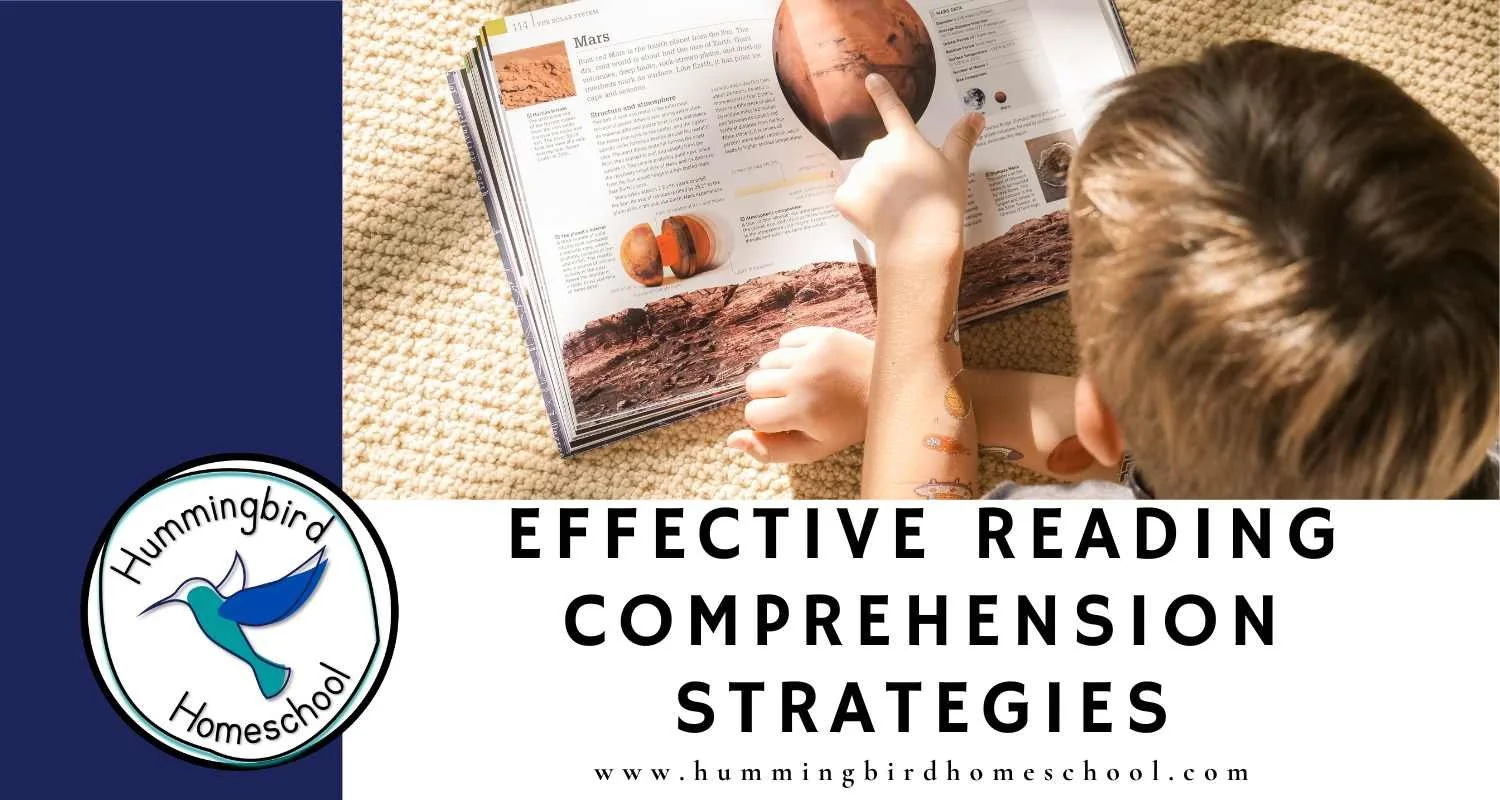
We all know how vital reading comprehension is for a child's academic success. Strong reading comprehension skills are the ultimate goal when learning to read.
If your child has basic reading skills like decoding (sounding unfamiliar words out) but lacks comprehension skills, then lessons in every subject will always feel like you're hitting a wall.
If teaching reading comprehension feels intimidating, no worries! In this blog post, I will share some effective key strategies you can use to improve your child's comprehension skills.
What is Reading Comprehension?
Reading comprehension is the ability to understand what has been read and is an important literacy skill. It allows them to interpret and understand what has been read across any subject area and grade level.

Many cognitive strategies for reading comprehension are used when constructing meaning while reading.
Good readers will perform these thought processes simultaneously; read and understand. They'll both decode and make sense of the text.
Weak readers might be able to decode words, or even read fluently but have no clue about the meaning or purpose of the text. They probably won't be able to answer questions or make sense of unknown words.
Strategies For Reading Comprehension
There are a variety of strategies that homeschool parents can use to help their kids improve comprehension.
These strategies include:
having conversations about the text being read;
creating mental images to visualize what is happening in the story;
asking questions about characters or events in the book;
summarizing stories after reading them;
and making connections between different texts.
It's important to teach and have younger readers practice a variety of effective reading strategies. The more tools kids have to guide them, the more likely they are to find success with text comprehension.
Teaching Reading Comprehension Success Tip:
I highly encourage you to avoid being boring when teaching reading comprehension! We want young readers to remain curious and to have a passion for learning!
If kids hate the activities that work on their comprehension, they'll struggle with motivation and lose confidence. When a child believes they can't learn or feel the success of those ah-ha moments, you're losing a learner.
That said, please don't drill your kid with questions; have discussions. If children feel like it's a quiz, then they'll associate the task with being right or wrong. This can create anxiety, and anxiety blocks the brain from learning.
Let's get started!
How to Teach Reading Comprehension Strategies to Students
1. Start with the basics
Before you dive into complex reading comprehension strategies, start with basic comprehension skills. The following strategies and activities are appropriate for anyone, even young kids working on pre-reading skills like print awareness.

Even pre-readers can work on reading comprehension! She’s 4, but she can follow along with the storyline through the pictures in the book.
Using Images to Improve Comprehension
Look at and discuss images. These can be photographs, cartoons, art, kid magazines, or any picture book -wordless picture books are a fantastic starting point!
Model How To Think Aloud
Model thinking aloud by sharing your thoughts about the purpose of the image. These useful prompts can help with what questions to ask:
What things do you see?
What emotions do you see?
Why was the image created?
What are they trying to show
Look For The Who, What, When, Where, and Why
Who: can you tell the main character of the image?
When, Where: Talk about the setting of the picture
What, Why: discuss the activities happening or the emotions portrayed
Encourage Students To Form Their Own Opinions
Have your child form their own opinions about the intent of the image. Don't be afraid to have your child clarify if you don't understand what they're talking about - it's a discussion!
Being able to clarify meaning is a comprehension skill! They'll need to be able to recognize when they don't understand something and how to stop and find answers before proceeding.
Rinse & repeat! This is excellent practice for active thinking, which will transition to active reading.
You can do this with single images (like art!) or follow a story line in a picture book. Practice with both fiction and nonfiction. Don't shy away from using expository text!
Practicing with Nonfiction Books
For nonfiction, you can use an image to find context clues with unknown words. Choose an image that highlights vocabulary words with a labeled diagram.
If you're looking at a map, discuss the geography. What attributes does the location have to its geographic features? For example, you can see on the map that Spain has a coastline - does that affect the information you're learning about Spain? Can you make inferences about their culture, such as incorporating seafood into the cultural cuisine? What type of weather might they have?
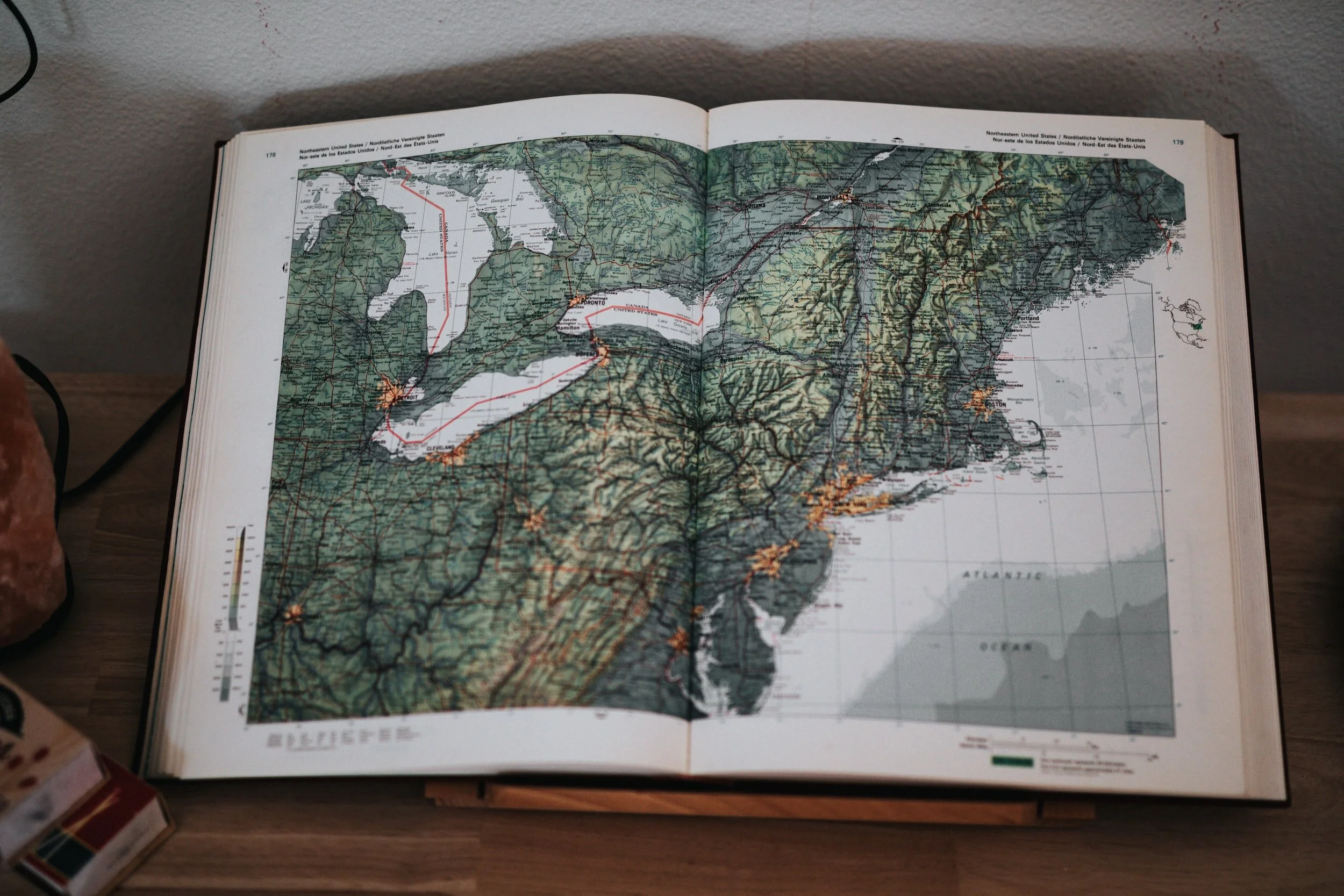
Using nonfiction books, like this atlas - you could ask questions about what they see and what it means. For example, New York has lots of coastline and access to ocean fishing. Michigan does not.
Ask questions that spark discussions. Let's create some strong readers and some great thinkers!
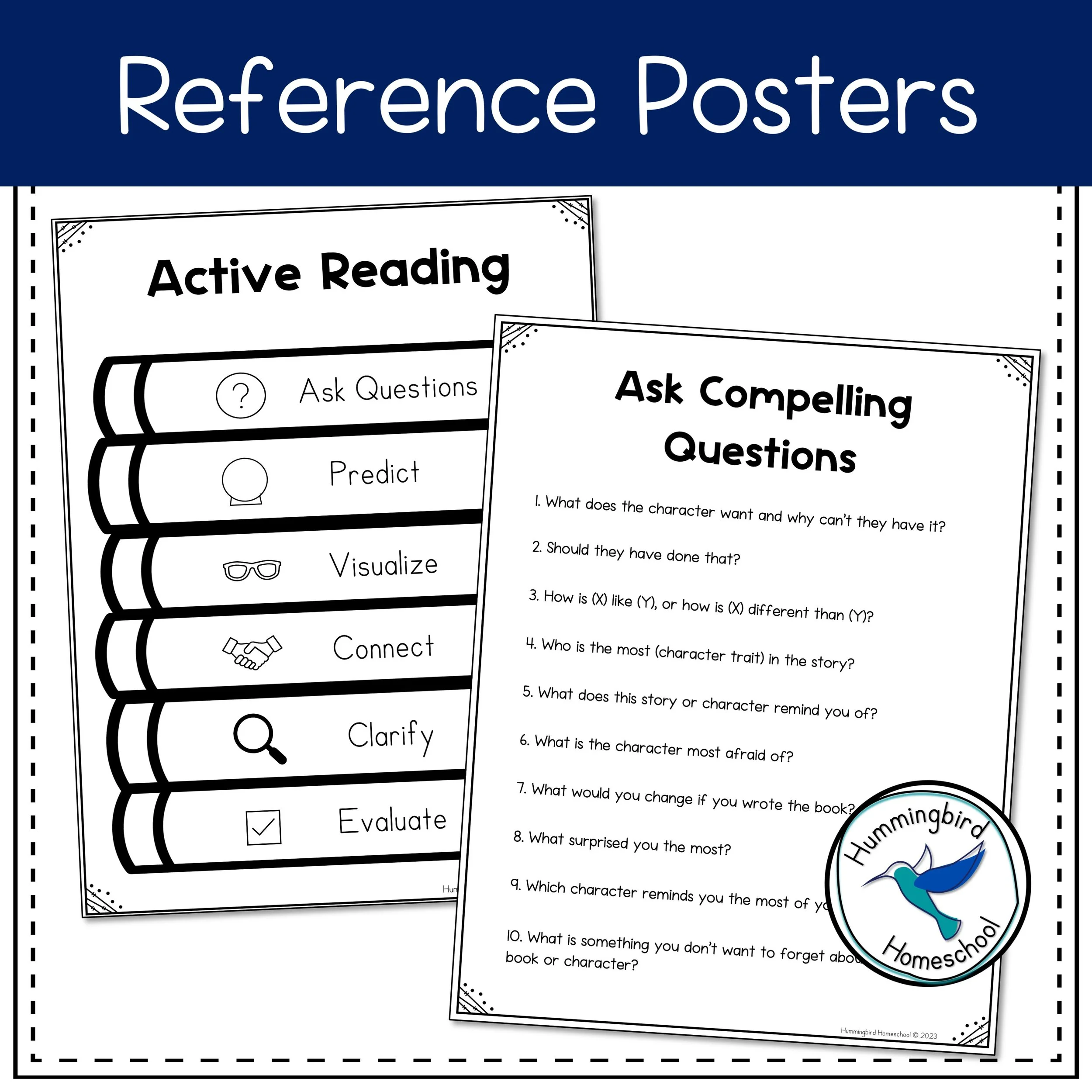
These reference posters are part of the Reading Comprehension Graphic Organizers bundle in the shop!
2. Encourage Active Reading
When your child is familiar with practicing comprehension strategies through images, jump into books! Active reading involves engaging with the text in a meaningful way.
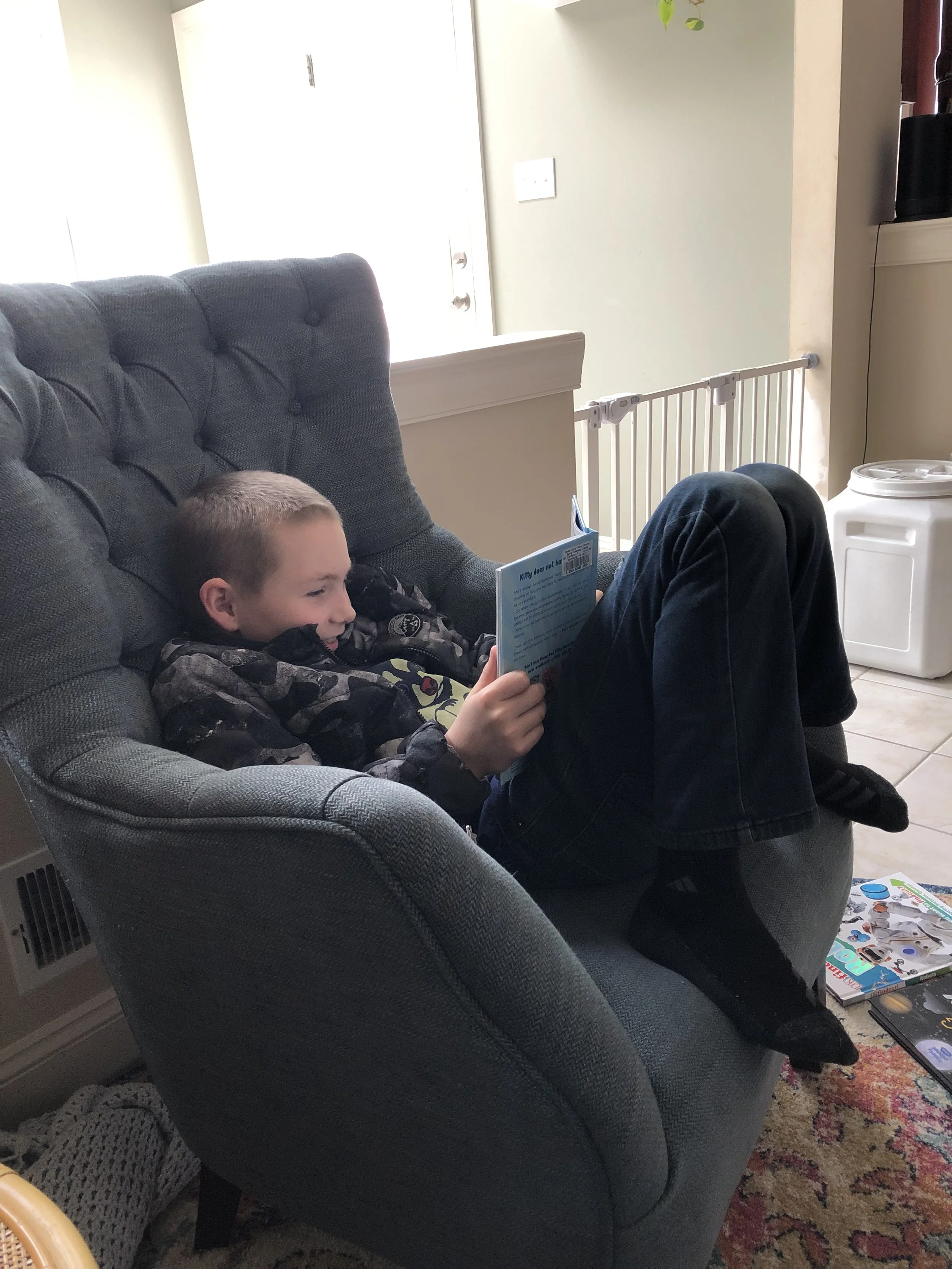
Activating Prior Knowledge
Reading comprehension requires having some existing content knowledge that you can link new ideas to. For example, when you have even a faint background knowledge of sports, reading a story about goals, points, or baskets will make more sense. (For picture books about sports, this list is great!)
Reading aloud gives your child a new world and dramatically improves their background knowledge. Be sure to choose a wide variety of books to expose your child to and watch their knowledge grow!
You don't need to travel to the world to learn about different cultures; open a book! Personal experiences help, but not everyone can afford the tickets and the library is free!
Take a Story Walk
When you start a new story or passage, flip through the pages to look at pictures and skim words to understand what the book will be about.
This activates prior knowledge and automatically helps the story make sense. As a result, there are fewer surprises, and unknown words might be easier to understand in the context of previous experiences.
Going back to the sports example, if the word goal is hard to sound out given the 'oa' vowel team, it won't be as much of an obstacle if you see a picture of a soccer game with a player kicking the ball into the net.
Start with Familiar Stories
You can also read aloud a familiar story your child has prior knowledge of. Periodically pause while reading and seek answers to questions you haven't asked before.
How would you feel if you were the main character?
Do you think you would make the same decision in that situation?
What other decisions could have been made, and what would have happened in those situations?
How would you change the ending to the story if a shark bit the book in half?!
Does this remind you of any other stories or movies?
Encourage your child to ask questions, make predictions, and draw connections as they read. These reading strategies will help them internalize the information and remember key details.
Stopping to practice these strategies while reading will set them up for success when reading independently.
Practice Summarizing
Starting with short passages or pages, you can ask your child to summarize what they read in their own words to reinforce comprehension. This will also help you see where the holes in understanding are.
Be sure to start with small chunks! Summarizing an entire book can seem daunting!
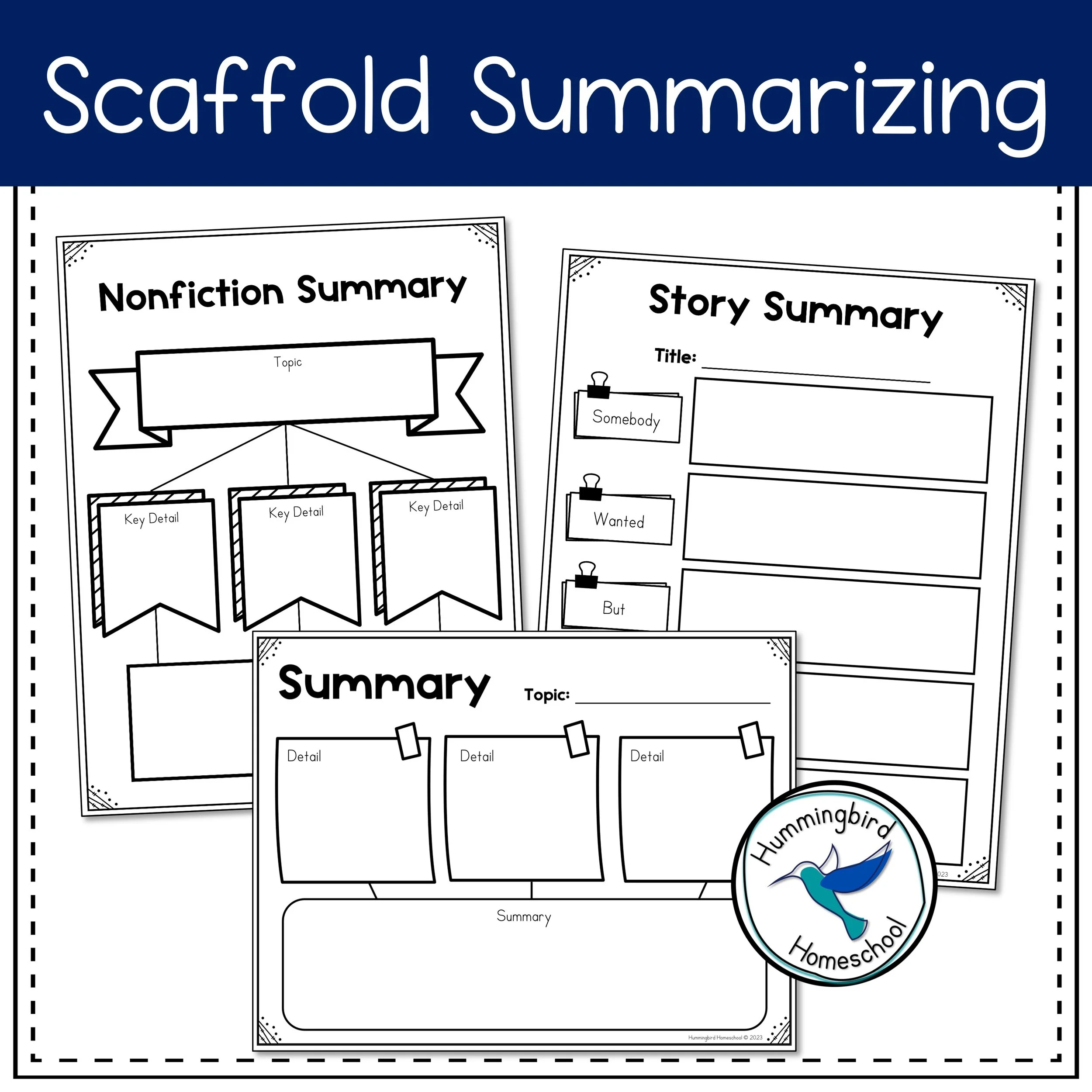
These summary graphic organizers are part of the Reading Comprehension Graphic Organizers bundle in the shop!
3. Use Graphic Organizers
Visual aids such as graphic organizers can be incredibly helpful for visual learners.
Graphic organizers like Venn diagrams, character maps, and story webs can help your child identify and organize important details in a text. These tools also help your child see the relationships between characters, events, and ideas.
I have a graphic organizer bundle in the shop that is the perfect tool for helping your child improve reading comprehension with any subject!
It's also easier to identify the conflict in a narrative text when broken out from the book. For example, when listing character traits, it might be easier to see that the conflict in the story is internal, man vs. self, when your child sees that the character was afraid in the beginning and overcame their fear at the end.
Not all comprehension strategies need to happen in your head - seeing details on paper, outside of the text, can be amazing for increasing comprehension
Use Graphic Novels
Don't be afraid to jump into the world of graphic novels! For younger readers, the accompanying graphics support the text and boost their overall reading comprehension too! In addition, these books are fantastic for reluctant or unconfident readers.
You can check out this list of graphic novels by age or read about scholastic book clubs and find age-appropriate books that are popular with their peer groups.
4. Practice Critical Thinking
Reading comprehension involves more than just understanding the text. It also involves thinking critically about the content. This skill can be very basic but also very advanced!
The questions I mentioned above start children thinking critically about a text. Those questions were:
How would you feel if you were the main character?
Do you think you would make the same decision in that situation?
What other decisions could have been made, and what would have happened in those situations?
How would you change the ending to the story if a shark bit the book in half?!
Does this remind you of any other stories or movies?
When ready, you can encourage your child to evaluate the text deeper by asking questions such as
Do you agree with the author's point of view?
Can you identify any biases?
What evidence does the author provide to support their claims?
These more advanced questions will help your child develop strong critical thinking skills. As they grow into more complex texts, strong readers will need to be able to identify the main idea, analyze the author’s message, and draw inferences from what they read.
Please don't overdo it, though; over-analysis will kill the joy of any topic. You do not want your child to dread reading and the accompanying comprehension tasks.
5. Make Reading Fun
Reading shouldn't feel like a chore. You can make reading comprehension fun by choosing books on topics your child is interested in or incorporating games and activities involving reading.
For example, you can create a scavenger hunt that involves finding items mentioned in a book or play a game of charades where your child acts out scenes from a story.
Another suggestion would be to join or create a book club! Kids are held accountable to get the reading done, and they practice a TON of comprehension skills while socializing and building friendships!
Join Scholastic Book Clubs as a Homeschool
My biggest secret for homeschool parents is to join scholastic book clubs (totally free) as a homeschool and get all the current, popular books for way cheaper than the stores, right to your doorstep, just like Amazon!
Let your child circle fun books in their book club flyers and spark excitement for a story or character! My kids love when I print out the monthly flyer and let them ogle the latest books. Just like a toy catalog, but with books!
It's free to join (I'm not an affiliate, just a BIG fan!), awesome for keeping you in the loop with what's cool in their peer group, and a great source for affordable gifts.
Use A Rigorous, Researched-Based Reading Curriculum
You know what else helps reading comprehension? When you start the reading instruction process with a solid curriculum that integrates reading comprehension strategies each step of the way.
We use All About Reading, and I happily stand by and promote this curriculum! Having seen kids fail in the classroom and watching homeschooled children and parents struggle with terrible reading curricula, I could not be more passionate about starting with the best possible reading program.

This boy’s proud moment of finishing All About Reading Level 4! Finished with formal reading lessons!
Reading is the foundation for learning. Giving your child the gift of solid reading and comprehension skills will serve them their entire lives with both productive and leisure pursuits.
What an amazing task! We are so fortunate as home educators to be able to give this gift and watch it take root and blossom!
Conclusion:
Teaching reading comprehension doesn't have to be overwhelming!
By starting with the basics, encouraging active reading, using graphic organizers, practicing critical thinking, and making reading fun, you can instill strong reading comprehension skills in your homeschooler.
Remember to be patient, supportive, and encouraging as your child develops these skills - they take years of diligent practice to learn. Happy reading, and enjoy the adventures!
New Posts To Check Out