
Print Awareness: Easy Ways to Develop Concepts of Print
What is Print Awareness?
Print awareness is a fancy term for seeing if a child understands what written words represent - and what to do if they encounter something (for example, a book) that includes text.
A simple concepts of print definition is simply the understanding that print carries meaning and helps us communicate just as spoken words do.
Print awareness, concepts of print, print concepts, print knowledge - tomato, tomato. (I really hope you read those words as toMAEtoe, toMAHtoe...). They all mean the same thing
Print Awareness Is An Essential Pre-Reading Skill
Children who understand concepts of print get that different texts have different functions. For example, they understand that print refers to meaning in different contexts such as menus giving food options, books telling stories, signs providing us with information, etc.

Read, read, read! Print awareness comes from every exposure to print, regardless of age!
It is one of five essential reading-readiness skills that we want every pre-reader to have. Moreover, this skill is one of the earliest forms of literacy a child is exposed to.
This article on reading readiness does an awesome job of clearly explaining the "Big 5" skills a kid must have before learning to read. Plus, here’s an easy reading readiness quiz to see where your child falls!
How Does Print Awareness Develop?
Print awareness is not something that children are born knowing. Man went thousands of years without any written form of communication. Because reading is an invention, concepts of print is something that must be taught.
So even though kids aren't born inherently having this skill, it's relatively easy to help your child develop print awareness. Children develop concepts of print primarily through observation and simple direction.
Children who naturally mimic what they see will correctly hold books and turn pages from front to back. They might even pretend to read from left to right, top to bottom.
What Do Print Awareness Skills Look Like?
Even with limited exposure to written language, most children understand that printed words have meaning and represent spoken language.
They also understand that it has a specific organization. These concepts are print awareness and book awareness.
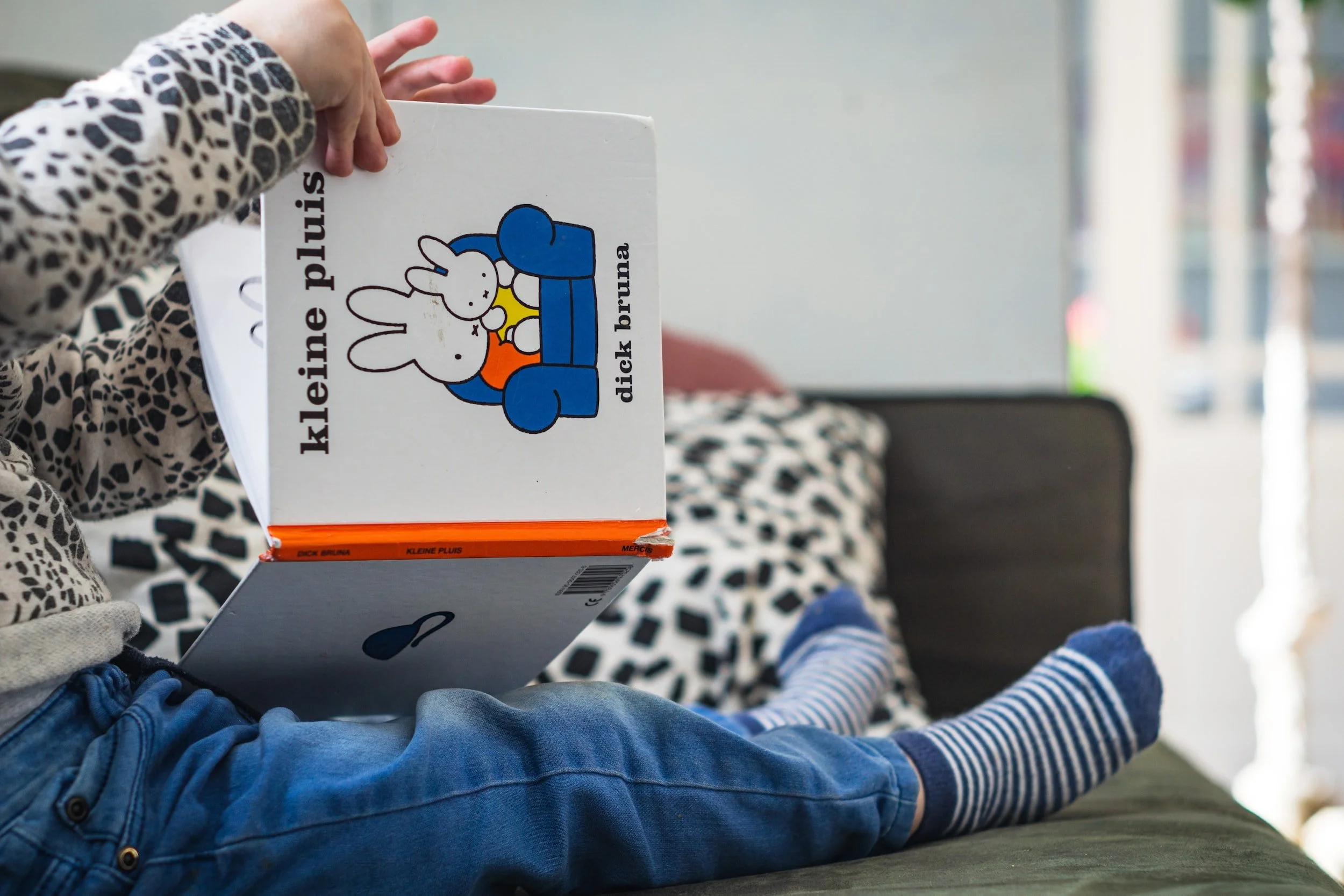
Notice the book is upside-down? This kiddo is young, so there is no need to stress over the lack of print awareness!
Kids develop these skills with exposure, and they are super easy to observe and assess.
Print Awareness Checklist
You can easily check your child's understanding of concepts of print by asking yourself these questions:
Does my child pick up books and pretend to read them?
Print awareness: A child who understands concepts of print knows that written text is directly related to the storyline.
Does my child point to written words in the environment and ask what they say?
Print awareness: They understand that written words have meaning and are starting to notice language in the greater world.
Does my child "write" or scribble notes? Do they recognize their written name?
Print awareness: This example shows they understand that text conveys a message and is a method of communication.
Does my child hold books the correct way?
Book awareness: When a child has book awareness, they understand the directionality of how books are written and texts are structured.
Does my child turn pages and demonstrate moving along the pages from left to right, from front to back?
Book Awareness: Again, they are demonstrating having a grasp of concepts of print by appropriate directionality and structure
Being a mom and big on teaching respect, I believe we should teach children how to TREAT books at the same time we reinforce how to USE books.
Respectful handling skills can (and should) be taught simultaneously with print awareness.
Easy Ways To Develop Concepts Of Print
You can help your child with their early literacy and develop print awareness skills by taking a few extra steps when reading books or magazines aloud with your kiddos.
Don't shy away from using academic vocabulary! They WILL start to understand what it means with repeated exposure in context! Concepts of print is the same thing - it’s all about repeated exposure!
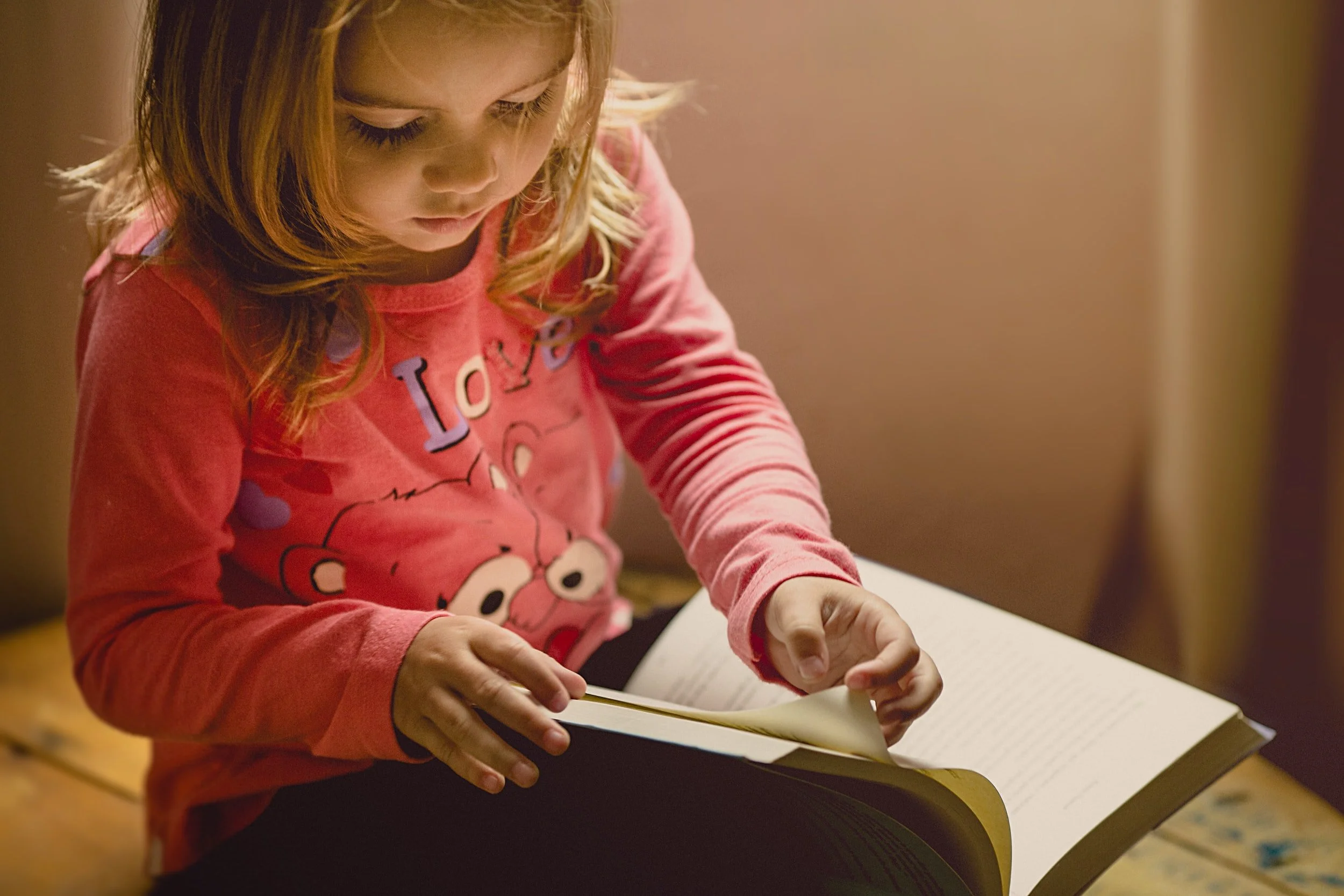
Give the children books! Read to them, let them handle the books, it’s all learning!
Here’s a list of concepts of print conversation starters and questions that you can use when exploring with your child.
Point to the front cover and read the title
"Let's look at the front cover and see what the book is about!"
"Let's read the title and predict what the story will be about!"
“Let’s count how many words are in the title.”
"Here's the first page! Let's start reading our story!"
Point to the author and illustrator names and tell what jobs they have
"I see the author's name on the front cover! Let's see what they wrote in the story!"
"Oh, here's the illustrator's name! I can't wait to see their art and the pictures they contributed to the book!"
Model tracking the words from left to right, top to bottom as they're read aloud
"Let's start reading at the top of our page."
“Can you find the first word on the page?”
“Let’s count how many words are in this sentence.”
"We've read all the words to the bottom of this page. Would you like to turn to the next page for us to keep reading?"
"The end! That was the last page of our book. Here we are at the back cover!"
With picture books, show how pictures illustrate what the words say as you read aloud
"See that character in the picture? The elephant in our book looks so silly!"
"Look! Here's that mountain the train had to cross over. It looks so big!"
"That kitten looks so sleepy. Do you think she will take a nap in our story?"
Check out wordless picture books to follow the directionality of books and print without words!
Learn the alphabet
A child’s print awareness is strongly linked to the understanding of our language. That starts with the alphabet!
Teaching the alphabet to preschoolers can seem daunting, but this article from All About Learning explains the best way to teach preschoolers the alphabet. It has great games, crafts, and fun hands-on activities to boost learning:
There's more to it than just singing the song - but even just a few minutes a day of letter play works wonders! A child with print awareness understands not only letter names, but identify capital and lowercase letters, and their sounds.
Once kiddos are ready for paper activities, you can use my printables to learn and reinforce the alphabet. You can view preschool print awareness resources in the Preschool Language Arts section of my shop. My preschooler loves doing the letter pages with letters in her name!
Reinforcing Print Awareness With Older Children
I'm talking about roughly kindergarten, the late preschool through 1st-grade children here.
These young learners don't need reminders about how to hold a book correctly, the front and back cover, or how to turn pages.
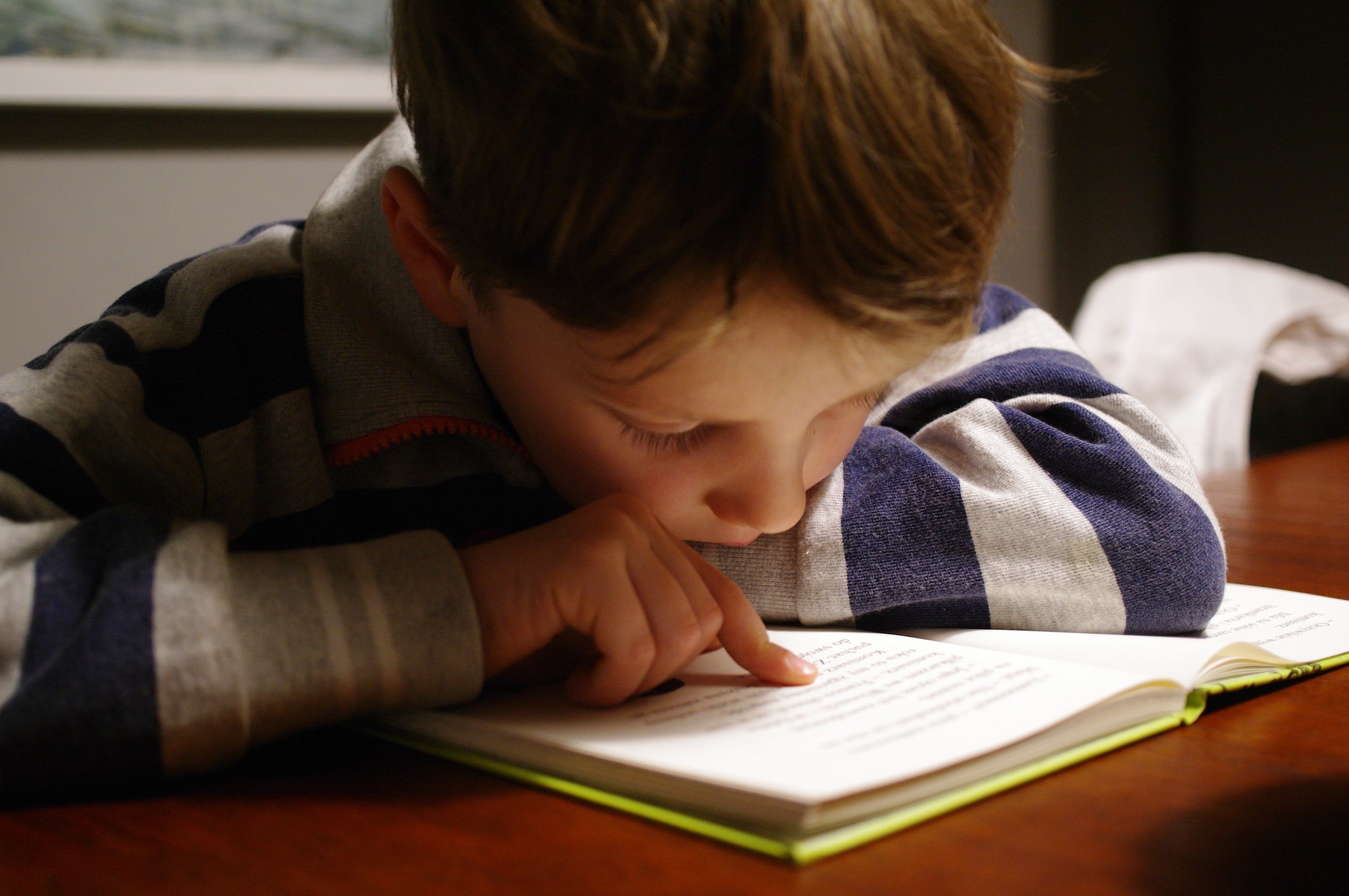
Using a finger to track print helps with print awareness and directionality, but it also helps the eyes and brain track.
They know how to point to words and understand that a book tells a story, or that the menu at their favorite restaurant lists different types of food.
But these kids DO still need practice with concepts of print:
recognizing capital letters to identify the start sentences or names
differentiating between capital and lowercase letters
The difference in the meaning of punctuation marks- an exclamation mark versus a period or question mark.
Let them point out the author and illustrator names, and let them tell YOU what their jobs are.
Have these early readers tell you what the title says about the story.
Allow the kids to demonstrate the directionality of reading with a return sweep of their finger at the end of a line of text.
Can they count how many words are in a sentence? You'd be surprised how many kids are stumped by this one - don't assume they know!
Fun ways to Reinforce Print Awareness
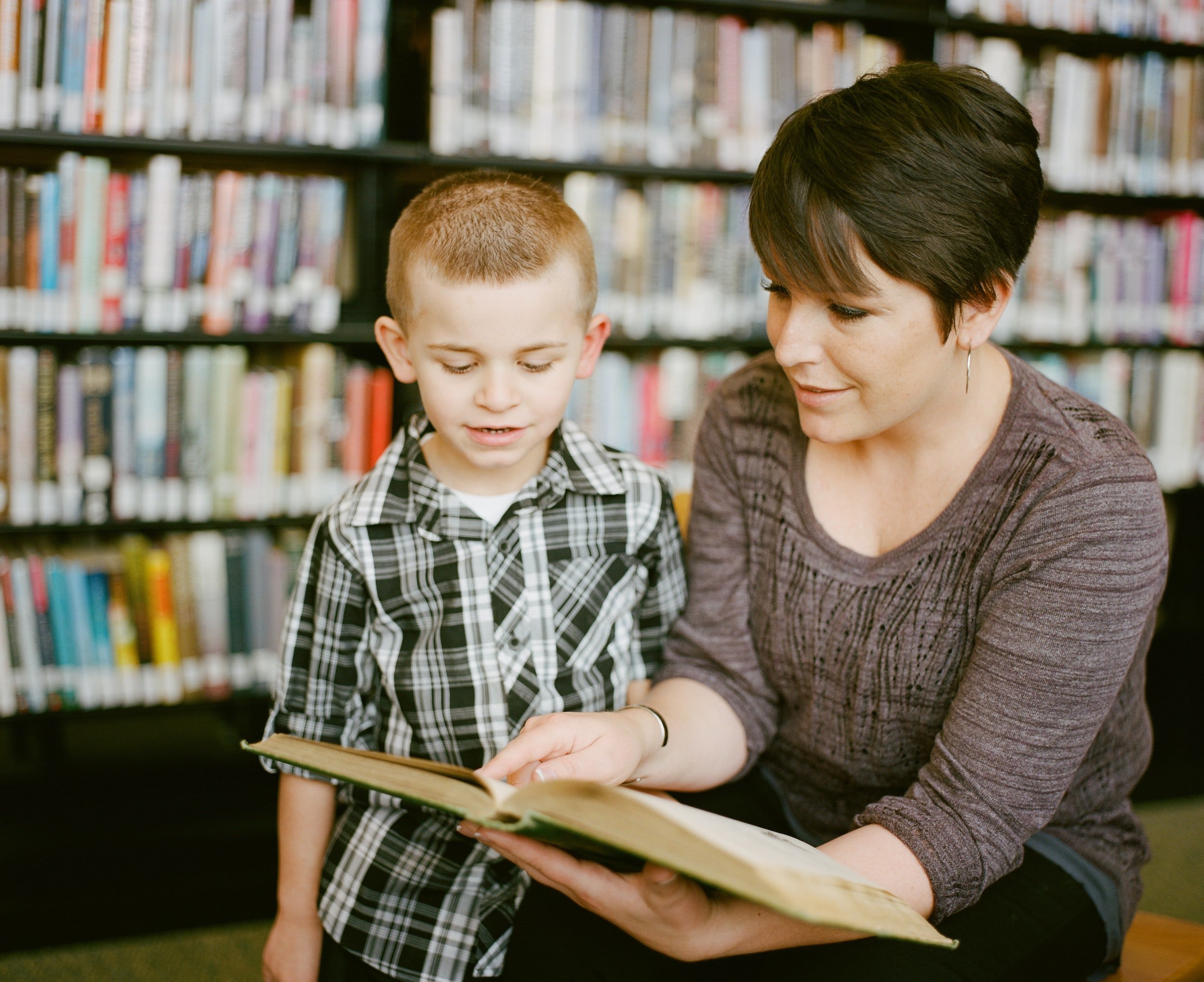
She’s pointing to the words; books surround them, this kid can’t help but learn!
It doesn't have to be daunting to reinforce concepts of print as kids get older! Try some of these fun and silly ways to build literacy skills!
Read alouds - read, read, read! If you are tired of the same stories, you can check out this massive list of awesome picture books by category. Or, you can print this PDF picture book list, take it to the library, and check them off as you finish them.
Read big books - they're literally BIG versions of regular story books! They're frequently used in primary classrooms during circle/carpet time and are SO FUN! I used to get these from Scholastic or Lakeshore Learning.
Read magazines - it's a big step away from durable board books, and kids love the responsibility of being entrusted with such fragile reading material! Point out how magazines have different functions than storybooks. (Highlights, Sports Illustrated Kids, Nat Geo Kids, Spider, Ranger Rick - this is a good list!)
Build a storybook - take turns telling a story with your kid and write it down as you go! Add silly details as you discuss your storyline and emphasize how you're printing exactly what is being said. This is a great chance to practice capital letters, punctuation, directionality, etc.
Create a dinner menu - real or make-believe, put some print to paper with creative writing fun! Weeknight menus for the family or a birthday party menu for a dinosaur!
Make a sign - Make a sign for the doors and rooms in the house. Text has meaning, so reinforce it by helping your kid label which rooms belong to who or what their functions are (laundry, bathroom, pantry, etc.)
Sort the mail - have your child read who the mail is for and create a pile.
Explore alphabet books - from board books to specialty topics, there are alphabet books that span from simple to complex! Yet they all reinforce the alphabet and the idea of structure within the language.
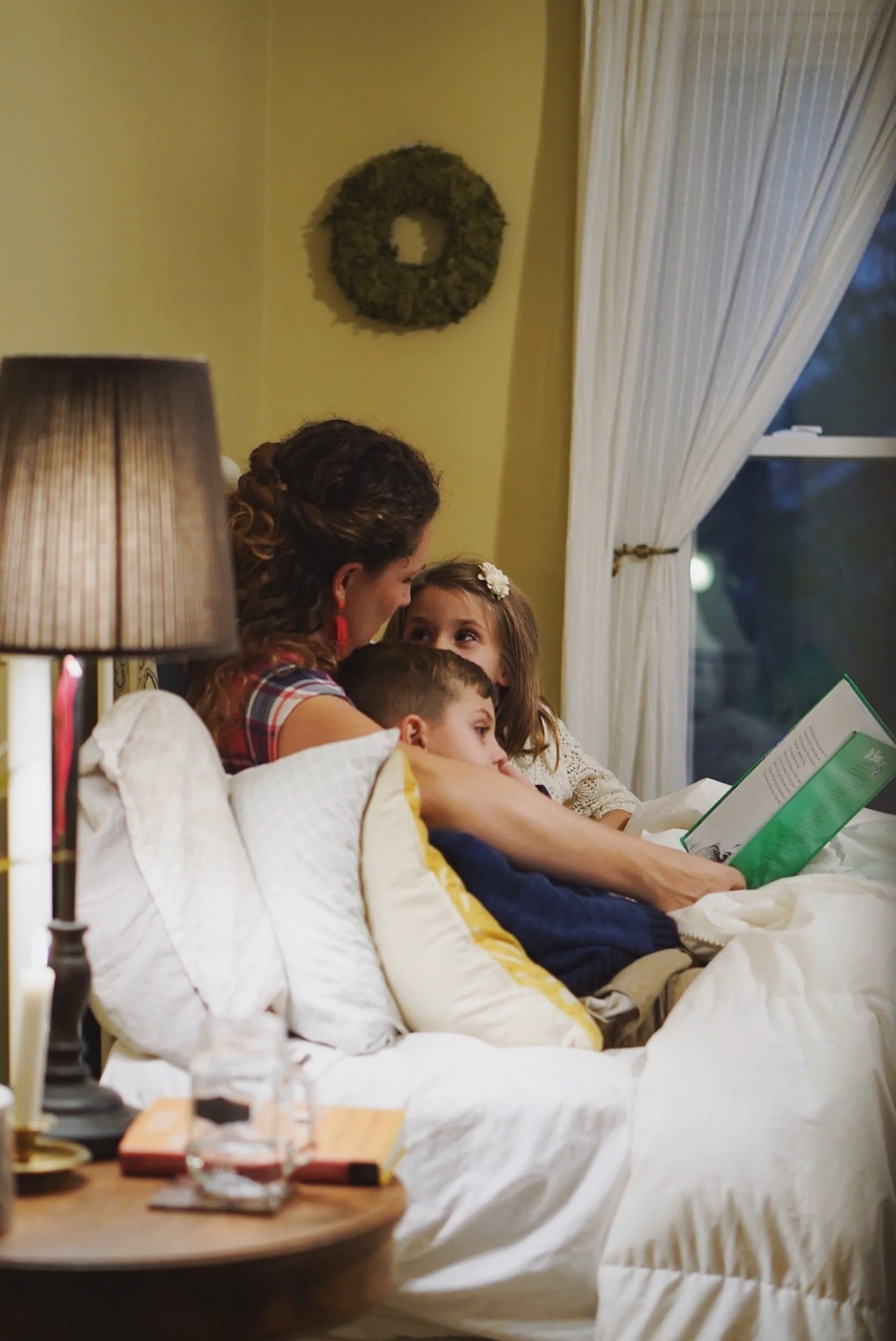
"If you want your children to be intelligent, read them fairy tales. If you want them to be more intelligent, read them more fairy tales." - Albert Einstein
Summary
To recap everything, print awareness (also called concepts of print or print knowledge) is understanding that written text carries meaning just as the spoken word does.
Book awareness is understanding the organization of text material, such as holding a book upright, turning pages from front to back, and scanning words left to right, top to bottom.
Print awareness is an essential skill that must be taught before learning how to read.
Print awareness is easily learned through observation and exploration of written materials such as books, signs, posters, menus, etc.
What To Do After Your Child Has Mastered Print Awareness
If you think your kiddo has print awareness and is ready to tackle the other Big 5 Prereading skills, you can check out All About Reading PreReading.

We used the placement test with Makena when she was 5 and she placed right in. We used Ziggy for the lessons, and while I didn't love using a puppet, she freakin ate it up! I can honestly say that I tried to skip some Ziggy lessons, and she wasn't having it - hands down, the puppet was her favorite part of reading lessons.
You can't go wrong with all of the placement tests and their awesome sauce Use it For A Year Guarantee. I've never cashed in on their guarantee, but I can't see it being an issue if you need it. Their customer service is fantastic.
If you want to know more before diving in, check out their reading FAQs or get free lesson samples for each level on their blog.
Have fun with this stage of literacy! It's literally all fun and games - get silly!
More Posts for Preschool & Kinder:




Use these color words worksheets to help your kids learn to recognize, read, write, and spell the color words!