
Free Printable Kindergarten Sight Word List
Grab the free sight word list from my store!

How to Use This Sight Word List
You can use this free sight word printable as a tool to help you know what words are commonly taught to kindergarten students. It actually covers kindergarten sight words plus other grade levels. Some students do well with sight words; others use them as a crutch, which can hurt their reading development.
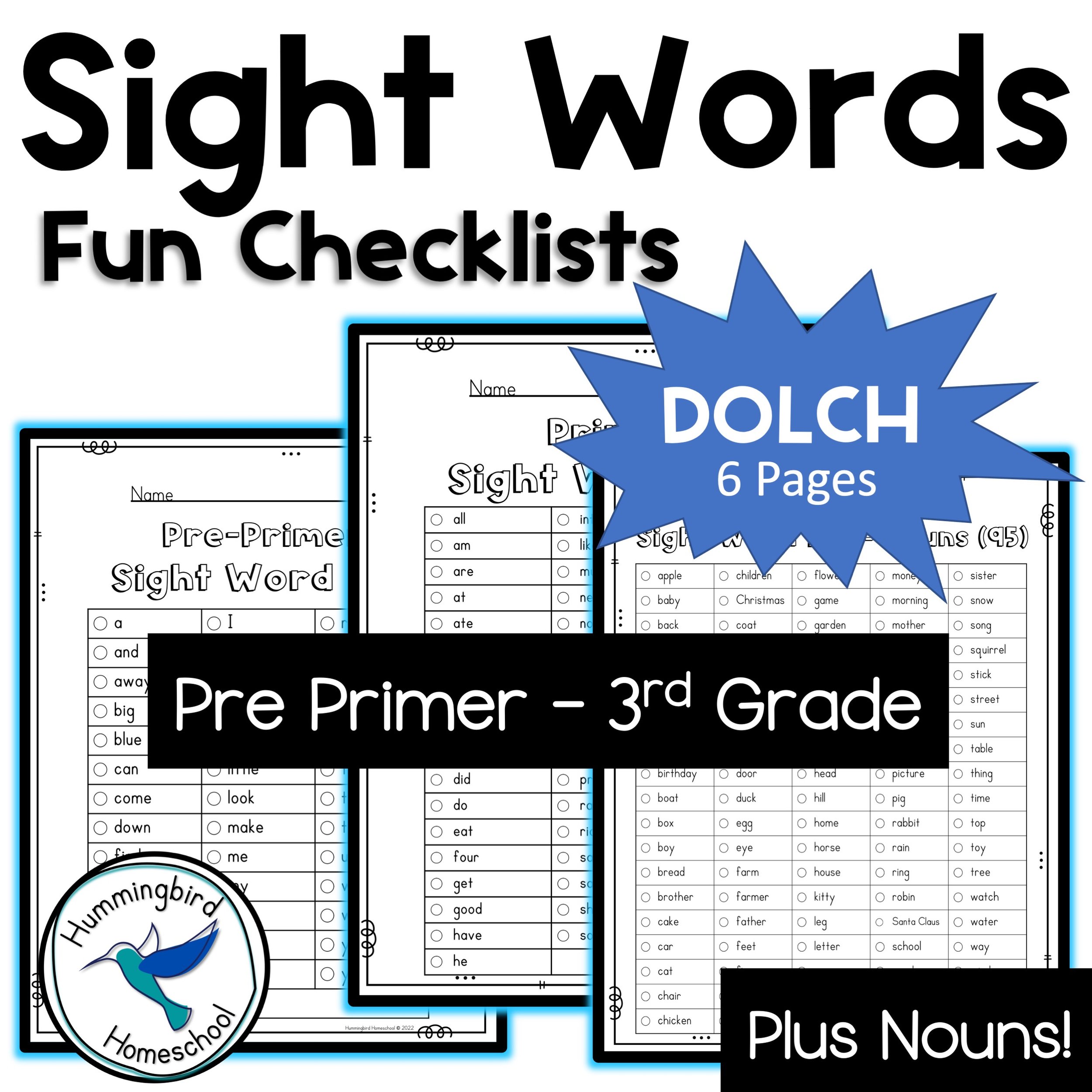
These sight word lists are free to download & print in my TPT shop!
My daughter needed them to help with confidence and fluency. They helped boost her confidence when dyslexia was holding her back. I used this sight word list to keep track of she was remembering.
If you're unfamiliar with teaching kids to read, Here's a quick breakdown of the concepts of Sight Words. If not, scroll down for fun activities to use with the sight word list included!
What Are Sight Words?
Sight words, also known as high-frequency words, Dolch sight words, or Fry Sight Words, are commonly used words that early readers are encouraged to recognize instantly.
The goal is for the word to be identified 'on sight' without phonetic decoding. This supports fluency, allowing students to focus on rather than word decoding.
How Are Sight Words Chosen?
Sight words are chosen based on their frequency of occurrence in the English language. These are words that appear most often in children's texts. Examples like 'the,' 'and,' 'it,' 'to,' 'in,' 'is,' 'you,' 'that,' 'he,' 'was,' 'for,' 'on,' 'are,' 'as,' 'with,' 'his,' 'they' and 'I' are all commonly used sight words.
Sight words are carefully chosen because they don't follow the usual phonetic rules. Instead of relying only on phonetics, we learn these words by seeing them often and memorizing them. This way, children can quickly recognize and understand these words more easily, which greatly improves fluency.
Why Teach Sight Words?
When it comes to early reading, sight words play a special role. Encouraging children to memorize them can boost confidence and fluency, enabling instant recognition and understanding.
However, it's important to note that the sight word approach is no longer considered best practice. While it has its benefits, it's equally important to develop foundational decoding skills and phonetic understanding for independent reading and comprehension of unfamiliar words. I address this at the very end of the post in my warning on sight words.
I've taught sight words to my kids with All About Reading. The curriculum calls them a Leap Word and uses them to reinforce and enhance their systematic phonics instruction.
We have also used some sight word worksheets, but mainly for handwriting practice. It's a nice blend. Heavy sight word practice has never been our main method of instruction.
Kindergarten Sight Words Activities
Some kids like flashcards, while others don't. You have to take their learning style, age, and reading readiness into account. Don't push if it's a struggle!
Differentiated Sight Word Activities for Kindergarteners
Beginner Level
Sight Word Bingo: Create a Bingo board with sight words. As you call out the words, your student can cover them up with a marker. When they get a row, column, or diagonal, they win!
Sight Word Matching Game: Create flashcards with sight words. You'll need two cards for each word. Mix them up and place them face down. Then, your child can flip over two cards at a time, trying to find the word matches.
Intermediate Level
Sight Word Scavenger Hunt: Write sight words on sticky notes and hide them around the house. Give your child a list of words to find. As they find each word, they can cross it off their list.
Sight Word Hopscotch: Draw a hopscotch grid on the sidewalk with chalk. Instead of numbers, write sight words in each square. Your child can hop onto the correct word as you call them out.
Advanced Level
Sight Word Sentences: Write sentences using sight words. Have your child read the sentences, underlining the sight words as they go.
Sight Word Story Challenge: Give your child a list of sight words and challenge them to write a short story using those words.
Kindergarten Sight Word Worksheets
I like using Teachers Pay Teachers for finding fun sight word activity sheets to download. You can find both high-quality paid resources and free printable sight word worksheets to print at home as a PDF file. Then you have your sight word worksheets on your computer to use and print as needed with other kids!
I bought sight word workbooks for my oldest daughter, but I totally regretted it when I realized I would have to rebuy something for my younger daughter. It felt like a waste of money, plus she liked the games with the flash cards much better since we made them fun movement games.
If you only have one child to teach, then a workbook might work for you! The one I linked above was mermaid themed - which my daughter loved coloring.
How to use the Kindergarten Sight Word Practice Sheets
I used the copy-type worksheets mainly as handwriting practice. Honestly, my oldest daughter really liked coloring the pictures in the workbooks, which is why I used them. If she was motivated to complete a handwriting page while being exposed to sight words and spelling, I considered it a win!
A Warning About Sight Words!!!
Please don't pressure little ones to master sight words if they struggle. It's totally possible that they're developmentally not ready to learn to read!
Another thing that parents have to consider is that while sight words can be beneficial in building reading fluency and confidence, an over reliance on them can hinder their development of phonetic skills.
The high frequency sight words approach tends to bypass the process of sounding words out, which is essential in decoding new or unfamiliar words. If a child is taught to recognize words as whole units, they may struggle when encountering words not in their sight word vocabulary.
This could lead to a limited reading range and difficulty comprehending more complex texts in later grades. A balanced approach that combines sight word recognition with phonetic instruction is what you want for a well-rounded approach to reading instruction.
More About Reading & Language Arts




Learn all about literature-based homeschool curriculum and learning through living books. Popular curriculum lists included!