
Homeschool Co-ops: A Straightforward Guide to Enhancing Homeschooling

Now that it's been a few years since covid-schooling took the world by storm, many who have stuck with homeschooling are turning to co-ops to try and marry the advantages of homeschooling with the benefits found in a traditional school setting.
Maybe your family is looking to shake up the routine a bit! Or maybe you have no idea what a co-op is, and this is a safe place to learn about what everyone seems to be talking about.
This post is all about homeschool co ops, or co-op homeschools (what it's called depends on where you live). Attending a co-op is definitely a growing trend right now, and who knows, it might just be the perfect fit for your family!
Key Takeaways
You can enhance your child’s home education experience with Co-Op Homeschooling: Parents facilitate social opportunities, and classes offer a variety of educational & creative activities
Fostering friendships among homeschooled kids while networking & supporting other families in the community
Balance work/homeschooling with flexible scheduling options + enrich beyond academics for lifelong success!
Understanding Co Op Homeschooling

Imagine this... a group of homeschooling families coming together, pooling their knowledge and resources, and creating an exciting, vibrant homeschool community for their children. That’s essentially what a homeschool co op (short for cooperative) is all about!
Being part of a smaller, more intimate version of the larger homeschool support groups that you might be familiar with, with a focus on educational and social activities within a homeschool group. By joining local groups like a homeschool co op, families can enhance their homeschooling experience.
So, who orchestrates all these? The parents! Within a homeschool co op, parents take on a multitude of roles ranging from teachers to administrators to mentors. They handle everything from shaping the schedule to managing finances, ensuring smooth operations. Plus, they also get to choose, teach, or facilitate the different classes offered.
Think about it - not very comfortable with teaching world history? Well, tap into that parent who has a degree in history! Every community of homeschooling families is rooted in parents with varying talents.

I imagine this guy is teaching some sort of finance or tech skill…. lol!
The advantages of a homeschool co op extend far beyond academics. Some don't even cover academic subjects! They primarily revolve around fostering a supportive and tight-knit community, making the homeschooling adventure less isolating and more enriching. Some of the advantages of a homeschool co op include:
Offering your children extra learning opportunities
Providing socialization avenues
Sharing the homeschooling experience with other like-minded families
Sparking enriching conversations
Learning from each other
Offering children the opportunity to learn from other parents
Defining the Co Op Model

Co-ops are generally smaller, more intimate groups
When we talk about a homeschool co op, we’re referring to a group of homeschooling families that work together to organize educational and social activities for their kids. This is different from larger, all-purpose homeschool groups. Instead, co ops are smaller, more focused, and often revolve around specific educational and social themes.
The Role of Parents in a Co Op
Parents serve as the cornerstone of a homeschool co op, assuming roles such as:
Teachers
Facilitators
Administrators
Mentors
They manage schedules, finances, and ensure that the co op runs smoothly. But more than that, they are pivotal in creating a sense of community and providing social opportunities for their children.
That all might sound overwhelming, but it really depends on the person who decided to orchestrate everything. They can coordinate or delegate as much or as little as needed!
The heart of the concept is all about community learning and working together, which makes the co op model so unique and effective.
Variety of Co Op Classes

Heck yes! How about co-op class about FISHING?!? Why not?
The variety of classes provided by a homeschool co op stands as one of its most significant advantages. From academic subjects like biology, taught by a science professor, to fun activities like graphic design and cake decorating, co ops offer a rich array of learning experiences.
I have compiled a massive list of homeschool co-op class ideas, arranged by subject and age group. Check it out for some inspiration!
Navigating the Joining Process
If the idea of joining a homeschool co op intrigues you, you might be wondering, “How do I start?” Finding the right group of families for your child is essential. Look for:
Classes that align with your child’s interests and educational goals
A learning environment that matches your homeschooling philosophy and approach
Socialization opportunities that allow your child to interact with peers and develop social skills
If you can't find a group that resonates with your family's ideals, consider creating a group of your own! Chances are, there are parents interested in what you can offer. Even if it's super low-key like a book club!
The biggest takeaway is that you'll need to find a co op where the families involved suit your values and needs. If you aren't on the same page, you're not going to enjoy showing up for the school year.
Search Online and Local Resources
The internet is going to be your best bet. In our area, Facebook is generally the entry point. Most of these groups just don’t keep an updated website (at least in our area).
Since this group learning model is much smaller and more intimate than general homeschool groups, they aren't always advertised or easy to find.
I've found that once you're part of local homeschool groups, asking homeschool families is the best way to find out what's available in your local areas.
Some of the larger, more established groups are pretty easy to find. But they're also sometimes hard to get into as they restrict their numbers and have waitlists. Regardless, they can be a great way to get started. I have a friend who was able to join a local, larger co-op because she was willing to teach enrichment classes on chess!
Remember to take into account the distance to the co op and whether it aligns with your weekly schedule.
Evaluating the Right Fit

Look at these happy homeschool moms! They found a co op that share their family values :)
Once you’ve found a potential co op, it’s important to evaluate if it’s the right fit for your family. Consider the following factors:
The co op’s teaching styles, policies, and whether they align with your homeschooling philosophy
Whether they comply with your state’s homeschooling laws
If they can accommodate your child’s learning style
Taking these factors into account will help you determine if the co op is the right fit for your family.
In our area, many groups require signing a statement of faith to join their groups. This goes against my belief system, so naturally, it eliminates most groups.
Don't settle for a group if it doesn't align with your family. They're not your people, and it probably won't be an enjoyable way to spend your time.
Formalizing Membership
Let's say you've found a group that looks perfect! Once you’ve discovered an ideal co op, the next step is to solidify your membership. This usually involves filling out a membership application, paying dues or fees, attending an orientation meeting, or completing other training.
You'll need to find out what your responsibilities will be and have time to prepare.
The Social Side of Homeschool Co Ops
One of the standout benefits of homeschool co ops lies in the social opportunities created. Co ops are not just about academics; they’re also about fostering a sense of community and support.
Fostering Friendships Among Homeschooled Kids
Being amongst people with common interests is a fantastic way to build relationships! While I don't believe the homeschool socialization myth, it can be hard for kids to make those lasting friendships (in any setting), and a co-op is a great way to bring kids together to potentially find others to connect with.
They provide opportunities for group activities and interaction, helping children develop their social skills. From group classes to extracurricular activities, co ops offer plenty of opportunities for kids to connect with peers of all ages and build lasting friendships.
Parental Networking and Support
Don't forget the parents! We need social outlets, too! With the required parental involvement in a co op setting, you're literally working side by side with parents with similar values! What a great opportunity for friendship and support!
By participating in a co op, parents have the opportunity to:
Meet and connect with other homeschooling families
Share experiences and resources
Collaborate on lesson planning and curriculum
Provide support and encouragement to one another
Structuring a Balanced Curriculum
One of the challenges of homeschooling can lie in crafting a comprehensive curriculum. Fortunately, the co op model can be a valuable tool for this!
Integrating Co Op Classes with Home Education
Integrating co op classes with home education allows parents to balance their child’s learning experience. This approach combines the best of both worlds! Kids are in a collaborative class-like setting, but also with the flexibility of homeschool ideas.
Tailoring Learning to Your Child's Interests
Often times, you’ll see that a co-op will offer classes that are beyond the scope of core subjects. By selecting classes that align with their child’s interests and needs, parents can customize their child’s learning experience.
You can often find various science classes, art history, or other interest-based classes for your kids to attend - like chess! One of our local groups had ancient weaponry as an option!
Making the Most of Co Op Opportunities

On this insanely hot day, we joined a homeschool co op to visit a furnace. So ridiculously hot.
Co ops present a multitude of opportunities for enrichment and development. Some of these opportunities include:
Field trips
Extracurricular activities
Parent-led initiatives
Leadership roles
Field Trips and Extracurricular Activities
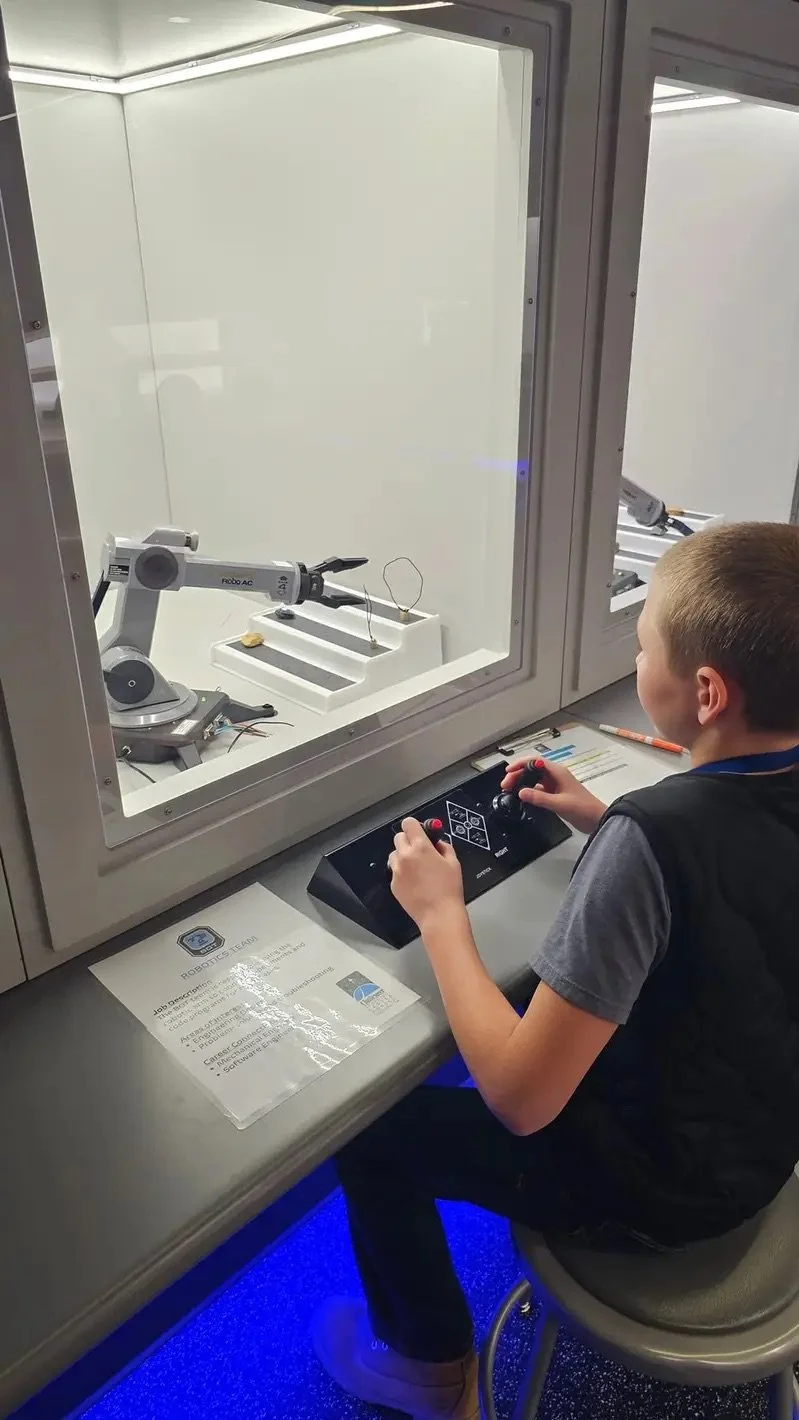
He got to join this NASA simulation field trip with one of our local homeschool co ops!
Field trips and extracurricular activities can be a big part of the co-op experience. They offer unique learning opportunities that extend beyond the classroom and allow children to explore new interests and develop new skills.
Whether it’s a visit to a museum or participation in a robotics club, these experiences contribute to a well-rounded education.
Not all co ops are about the field trips, so you'll want to research how the group is structured.
There are a few groups in our area that open their field trips to families outside of the co-op to help them gain the attendance numbers required for group entry. Don't be afraid to ask if this is an option for you!
Parent-Led Initiatives and Leadership Roles
Parents are the real superstars in the co op world! They're the ones who turn the co op experience from good to fantastic. Whether they're leading the charge on new initiatives, teaching classes, or stepping up to leadership roles, parents are the backbone.
Their involvement doesn't just make the co op better for their kids, but it also creates a vibrant sense of community and collaboration among the parents themselves. It's all about teamwork, and let's face it, teamwork makes the dream work!
How Co Ops Can Transform Your Homeschooling Adventure!
Co ops can be game-changers in the world of homeschooling. They bring a whole new dimension of community, all-round learning, and, let's face it, more fun to the homeschooling journey.
Embarking on a Shared Adventure
When you join a co op, it's like jumping on board a shared adventure with other families. You're all in it together, learning, growing, and navigating the homeschooling world as a team. It's this spirit of togetherness and teamwork that makes co ops such a vibrant and enriching part of homeschooling.
It's Not Just About the Books!
But co ops aren't just about hitting the books. They're about life skills, social growth, and building confidence, too. Co ops give kids the chance to grow their social wings, boost their self-esteem, and pick up practical life skills that will be handy in the real world. It's about growing the whole person, not just the student!
The Benefits of Co Op Homeschooling for Working Parents
Joining a co-op can be a real game-changer for working parents! It can help you juggle your work schedule and co-op responsibilities more efficiently. And guess what? You might even find other families who are happy to lend a hand with your kids while you're busy at work.
Sure, it might not always pan out this way, but it's a fantastic option for families who are passionate about homeschooling but need a steady income.
Summary
In conclusion, co ops offer a powerful blend of academic, social, and personal growth opportunities. They foster a sense of community, offer a well-rounded education, and provide flexibility and support for working parents. Whether you’re new to homeschooling or a seasoned veteran, joining a co op could be a beneficial step on your homeschooling journey.
Frequently Asked Questions
What does co-op stand for in homeschooling?
A homeschool cooperative (or co-op) is a more structured type of gathering where students meet regularly to learn together in a group setting. These cooperatives typically offer academic teaching and may also have extracurricular activity options.
What are the benefits of a co-op?
Joining a co-op is like joining a big, fun family! It's a place where everyone can hang out, make friends, and support each other. It's a community that makes homeschooling feel more social and inclusive for kids and parents alike.
Another bonus? Parents in a co-op come with their own unique set of skills and knowledge. This means they can offer super cool, specialized classes that you won't find in regular schools.
What roles do parents play in a co op?
Parents in a co op have many important roles, such as teachers, facilitators, administrators, and mentors. They are essential to the running of the co op and teaching/facilitating the different subjects.
More Posts About Homeschool Co Ops

Curious about Homeschool Co ops? Learn everything you need to know from what they are to finding the fit for your family!