Finding The Right Secular Math Curriculum for Homeschool
Spoiler alert - the perfect curriculum doesn't exist - for any subject.
However, you can find one that suits a variety of your family's learning styles and needs, and those qualities will vary from curriculum to curriculum!
Understanding The Structure of Math Instruction
Isn't math just math? Yes and no. Let's envision math like a tree.
Math branches out from the same trunk (foundation)
Math is a core subject that requires basic mastery before moving on to more difficult concepts. It begins in a linear fashion.
As concepts progress, they begin to break into various branches, all using the same foundational concepts. This generally happens after basic multiplication and division instruction, around 4th or 5th grade.
By the time 5th/6th grade math rolls around, you will really begin to see if a child has a solid math foundation, or if they've been getting by without really understanding what they were doing.
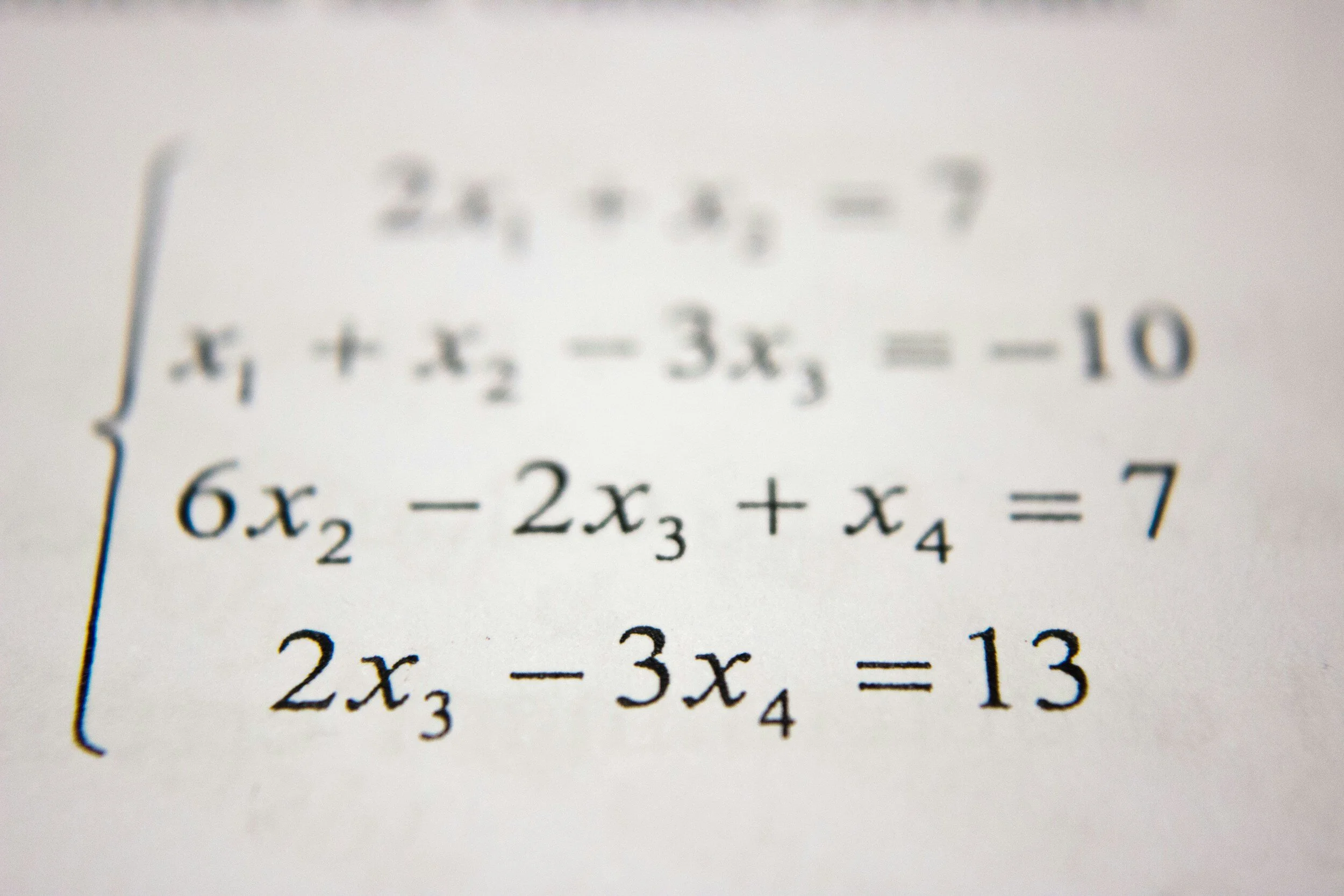
Doesn’t this look like a good time?
If your child doesn't understand the WHY behind place value, addition, and subtraction, everything seems to get infinitely harder to understand as it progresses through decimals, exponents, fractions, integers, statistics, and so on.
Grade level doesn't matter if a child hasn't mastered number sense or has poor conceptual understanding. The memorization of math facts will do them no good as they progress to more complex problems such as in pre-algebra or geometry.
The essential part of any early math curriculum is to build a solid understanding of number sense. This shouldn't be rushed!
Everyone learns the same math, but not the same way
Since foundational math skills are the same, kids start in the same place.
But HOW they learn the basics should be related to their learning style.
When you're trying to find a math curriculum for homeschool, there seem to be tons of options and it can be a bit overwhelming. I get that! We tried 4 different math curricula in the beginning!
With so many homeschool math programs available, how do you choose the right one for your child? Here are some ways to narrow it down.
Learning Styles
Every child has a unique learning style. Some may be visual learners, while others are auditory or kinesthetic learners. It's important to consider your child's learning style when choosing a math program.

While reading through the following descriptions, keep in mind that incorporating all three learning modalities (visual, auditory, and kinesthetic) can be a fantastic way to build a math foundation - or it might be overkill!
I have one kid with math anxiety who needs it all & another who seems to inherently understand without any math instruction... Every learner is different; try not to force anything.
Visual Learners
Visual learners best process information through images, diagrams, and other visual aids. Hands-on materials such as manipulatives can also be helpful. Look for a homeschool math program that includes visual aids, colorful images, and plenty of opportunities for hands-on learning.
Auditory Learners
Auditory learners learn best through listening and speaking. These children benefit from math lessons that include audio or video recordings or lectures, as well as opportunities for class discussions or verbal explanations.
Kinesthetic Learners
Kinesthetic learners excel with hands-on activities and movement in their math education. Consider choosing a math curriculum that includes hands-on projects, games, or physical manipulatives for these types of learners.

Cards are an awesome (cheap!) way to work with math facts through games!
Teaching Methods
In addition to learning styles, it's important to consider your own teaching style and needs when choosing a math curriculum. Some parents want to be the instructor and others prefer to hand it off - there's no wrong way!
Some popular teaching methods include:
Traditional/Textbook-based: This method uses a textbook and workbook to teach concepts in a linear fashion, with practice exercises along the way. Some textbooks are written to the student for independent learning and others require parents to teach the lesson.
Unit Studies: Math concepts are taught within a larger unit or theme, incorporating other subjects such as history or science. This method can be especially helpful for younger learners to see math in action.
Online Classes or Video Based Learning: These methods utilize technology to deliver instruction, sometimes with interactive components for students. Parents do not teach math lessons and is popular for older students and higher-level math topics usually starting around middle school.
Learning Math for Mastery versus Spiral Learning
When choosing a math curriculum, you will see the terms "mastery" and "spiral" concerning learning styles. These can be confusing.
Mastery Based Learning
"Mastery Learning" focuses on one concept at a time until the learner achieves proficiency or mastery of that concept before moving on to the next. This approach helps in building a strong foundation and depth of understanding of each topic.
Mastery-Based: Students must demonstrate mastery of a concept before moving on to the next one. Like math units on a single topic.
Spiral Based Learning
On the other hand, "Spiral Learning" reviews multiple topics at once, while introducing and practicing new concepts. The key idea is revisiting each topic repeatedly over time with increasing complexity.
This method provides continuous exposure to different concepts, which can support connections and a broader understanding of mathematical structures.
Spiral/Incremental: Concepts are revisited and built upon throughout the year, allowing for continuous review and reinforcement.
Both methods have their merits and are used successfully by many homeschoolers. The choice between mastery and spiral learning depends largely on the learner’s individual style of learning and their ability to grasp and retain new knowledge.
My daughter does better with in-depth mastery and my son does better with spiral. Everyone is different and you may not know until you've tried both styles.
More Homeschool Math Curriculum Considerations

Cost
Math curriculum can range from free to hundreds of dollars per year. Before committing to a program, make sure you understand the cost and what is included in that price.
Some programs may charge additional fees for certain features or access to advanced material.
Flexibility
One of the great benefits of homeschooling is the flexibility, so why not look for a math curriculum that offers the same?
Some programs are self-paced, while others, such as online classes, have set schedules and deadlines.
Consider your lifestyle and routine. Will your child be able to work independently, or will they need help with time management and instruction?
Accreditation
Depending on your child's age and if they have plans on attending college, it may be important to choose a math curriculum or program that is accredited.
Accredited programs have gone through a rigorous review process and are recognized by educational institutions. This can help ensure that your child receives a quality education and has a valid transcript when it comes time to apply for college.
Parental Involvement
Some math programs require more involvement from parents than others. If you're a hands-on homeschooling parent, this may not be an issue for you.
However, if you have a busy schedule or prefer a more hands-off approach, you'll want to find a program that allows your child to learn independently.
Reviews and Recommendations
A great way to gauge the effectiveness of a math curriculum is by reading reviews and recommendations from other homeschooling parents.
Search for reviews on websites or ask for recommendations in homeschooling forums and groups. This can help you get a better understanding of the program's strengths and weaknesses from those who have used it firsthand.

Secular Homeschool Math Curriculum Options
Below are some popular secular homeschool math curriculum options categorized by type:
Hands-on & Text Workbooks
Math Mammoth: Workbook-based with free supplemental videos, this program is very comprehensive and avoids any gaps in learning. It is designed for children to be independent with minimal need for instruction. It is what we use.
Singapore Math: This workbook-based program has a different methodology than standard math instruction. It does well for children who are math-minded and understand concepts easily. At higher levels, it is more appropriate for gifted and advanced learners. I’ve used these for kindergarten math through 3rd grade in the past, but that’s about the age when their eyes started glazing over.
Life of Fred: This series is story-based, incorporating math concepts into engaging stories. It is best for children who enjoy reading and learn better through storytelling. A common complaint is the lack of practice and review problems. I see these for sale second-hand all the time, so be sure to check resale groups!
Math-U-See: This hands-on program uses manipulatives and a step-by-step approach to teach math concepts. I don’t have experience with this program, but it is supposed to be great for students with math-related dyslexia and other learning difficulties, like being a twice-exceptional (2e) learner.
Saxon Math: This traditional workbook-based program is known for its spiral approach, continuously reviewing previous concepts while introducing new ones. It can be overwhelming for some students. Another drawback is that many parents complain of missing concepts (holes) and a lack of emphasis on problem solving.
Online & Video Programs
Khan Academy: This free program offers comprehensive math courses from basic arithmetic to calculus. It also includes practice exercises, instructional videos, and personalized learning dashboards.
Teaching Textbooks: A well-known program that offers self-paced online courses with interactive lessons and automated grading. Prices are per month.
CTCMath: A program similar to Teaching Textbooks that provides video lessons, practice exercises, and diagnostic tests. It also has a parent-friendly app for tracking progress and grades.
I found this nice blog article that compares CTC with TT! It’s not mine, and it’s from 2019, but it has a nice rundown of each program and how’re they alike, but different.
Gifted Learners
Beast Academy: Designed for advanced learners, this program offers challenging and engaging math problems in a comic book format. It is best for children who excel in math and enjoy problem-solving
Art of Problem Solving: This program also caters to gifted learners with its challenging curriculum and emphasis on problem solving. It is generally the next step after students complete Beast Academy. It offers online courses, books, and a community of like-minded students.
If you have a child who is gifted or twice-exceptional (2e), I have written an in-depth article full of resources that can help!
Get Personalized Math Curriculum Support!
Struggling to find the perfect math program for your child? Reach out to me for personalized guidance and support in selecting a curriculum that fits your child’s unique learning style and needs. Together, we can unlock their full potential!

More Posts on Homeschool Curriculum