How Do Homeschoolers Make Friends?
Homeschooling & Socializing: Busting the myth that all homeschoolers will be socially awkward
This is a hot topic. It’s one I asked other homeschooling families before we started our journey. How do homeschooled kids make friends if they're not around other school kids? Won’t children struggle and be socially awkward? Am I doing enough for their self-confidence? These are common questions about homeschool and socialization for any homeschool parent.
The solution is called Social Linking & I’ll explain everything
Will My Kids Lack Social Skills if We Homeschool?
I don’t think there’s a black & white answer to this question for many reasons. Generally, I think the answer is no - a homeschooled child won’t be socially awkward simply for being homeschooled, at least not any more than they would be if they were enrolled in their local school district.
Local schools do not guarantee social situations that build skills and friendships.
Homeschool students can definitely make friends other than their own family members. Notice I said can make friends?
Making friends with other kids is never a guarantee in any setting.
Let’s start with the topic of making friends while homeschooling. There are tons of things you can do. After being a homeschooling parent without Facebook for three years, I should say, while possible, it takes a lot more effort.
Utilize Social Media and Online Groups
I began by searching the internet for local homeschool groups, or homeschool co op, in my area. I would imagine that might be all that's necessary for some areas, but where I live, many homeschool groups weren’t updated.
Facebook, particularly Facebook Groups, makes that part 10,000x easier.
I landed on an active Wild & Free group (search for a local W+F Group Here!) with which I could connect. Unfortunately, we missed many group events the first year and didn't make friends with other kids at the time. However, it was soon after we lost Wyatt, so spending time together as a family was better for our souls.
I did start to make some connections, though. I met incredible women who were homeschool parents with open, loving hearts. They gave us the grace to be slow in our commitment, which was perfect.
Over time, and with effort on my part to show up, I've created good friendships with these women and my kids have enjoyed spending time with other children.
Make Sure You Show Up!
I wholeheartedly believe that homeschooling families will reap friends in a way that mirrors the effort put out. You don’t need to be a social butterfly, but it takes effort, plain and simple. Simple tip? Put it into your schedule. Add it to your lesson plans. Make it a priority!
If you are not leaving your house and putting yourself in the path of other families, you won't be able to make new friends.
Let me say that again:
If you are not leaving your house and putting yourself in the path of other families, you won't be able to make new friends.
Related Reading: Using Homeschool PE as the perfect way to help your child create connections and make friends!
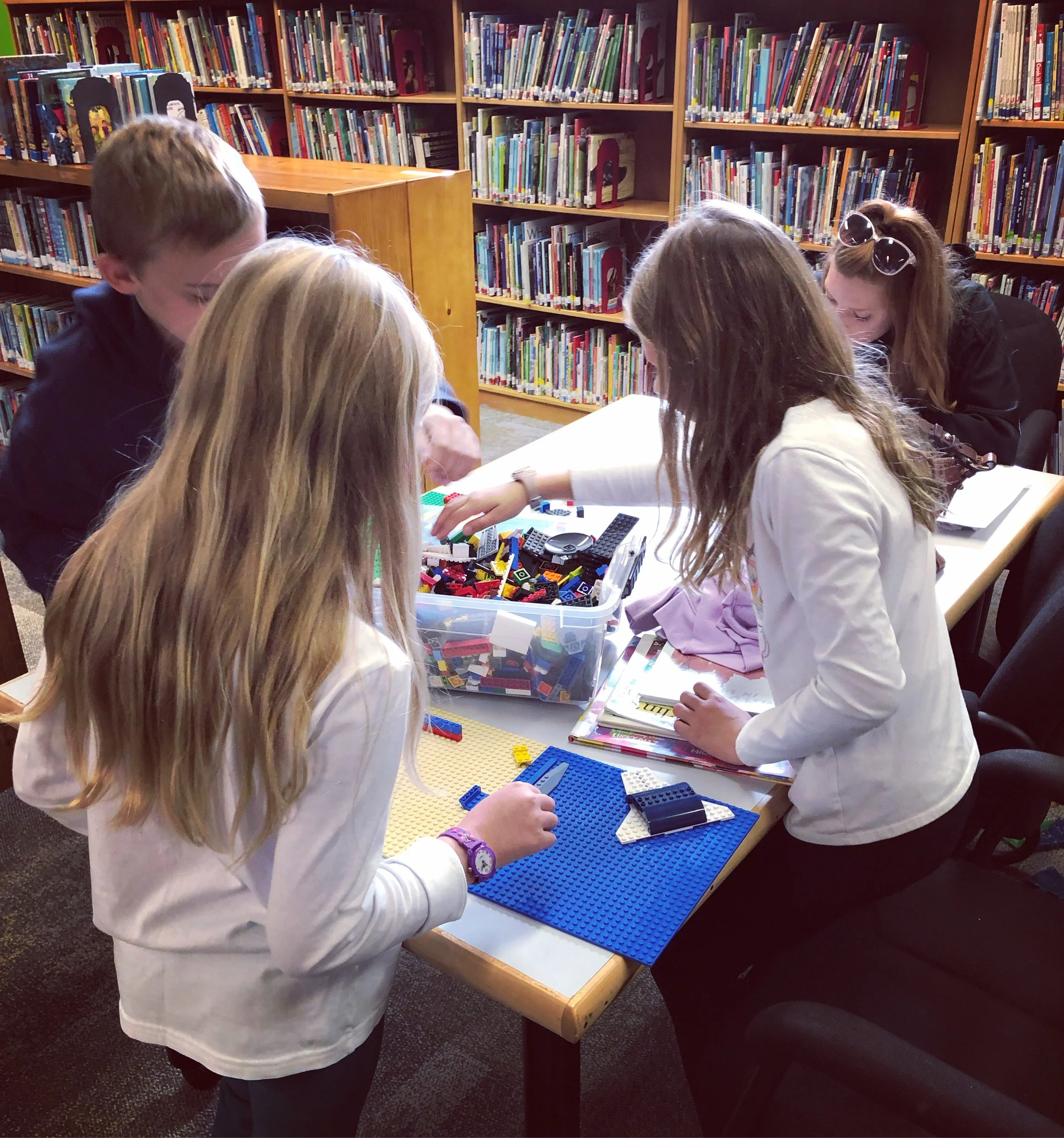
Weekly Homeschool Lab at the local(ish) library - we have a drive, but it’s worth it!
What Are Their Social Needs?
We become homeschool families for many reasons, and we must remember that we are all individuals. This means that as homeschool parents, we must sacrifice our own social comforts for the social needs of our children.
If you are an introvert who thrives in quiet spaces, you must be willing to expand beyond that if your child has extroverted tendencies and needs. Conversely, if you are extroverted but your child is not, you’ll need to consider their social needs for a break to recharge.
As an extroverted introvert (yes, we exist), I understand how difficult it can be to find new groups and commit to showing up when you don’t know anyone.
Who do you stand next to? What will you talk about? I’d say it doesn’t matter, but as the taxi driver, you also need to feel comfortable if you’re going to keep putting gas money into showing up.
Either way, the point is, you MUST show up! Your children won’t make friends if they don’t get exposed to other kids. Once you meet up, do it again and again.
Using Social Linking
At last, let’s talk about using ‘Social Linking’ to help homeschooled kids make lasting friendships and bust this socialization myth.
This is the part that has helped me the most. Again, it’s called social linking and I’m going to give you an example of how it works.
Let’s say you meet with a new homeschool group that likes to visit local parks, just like your family does.
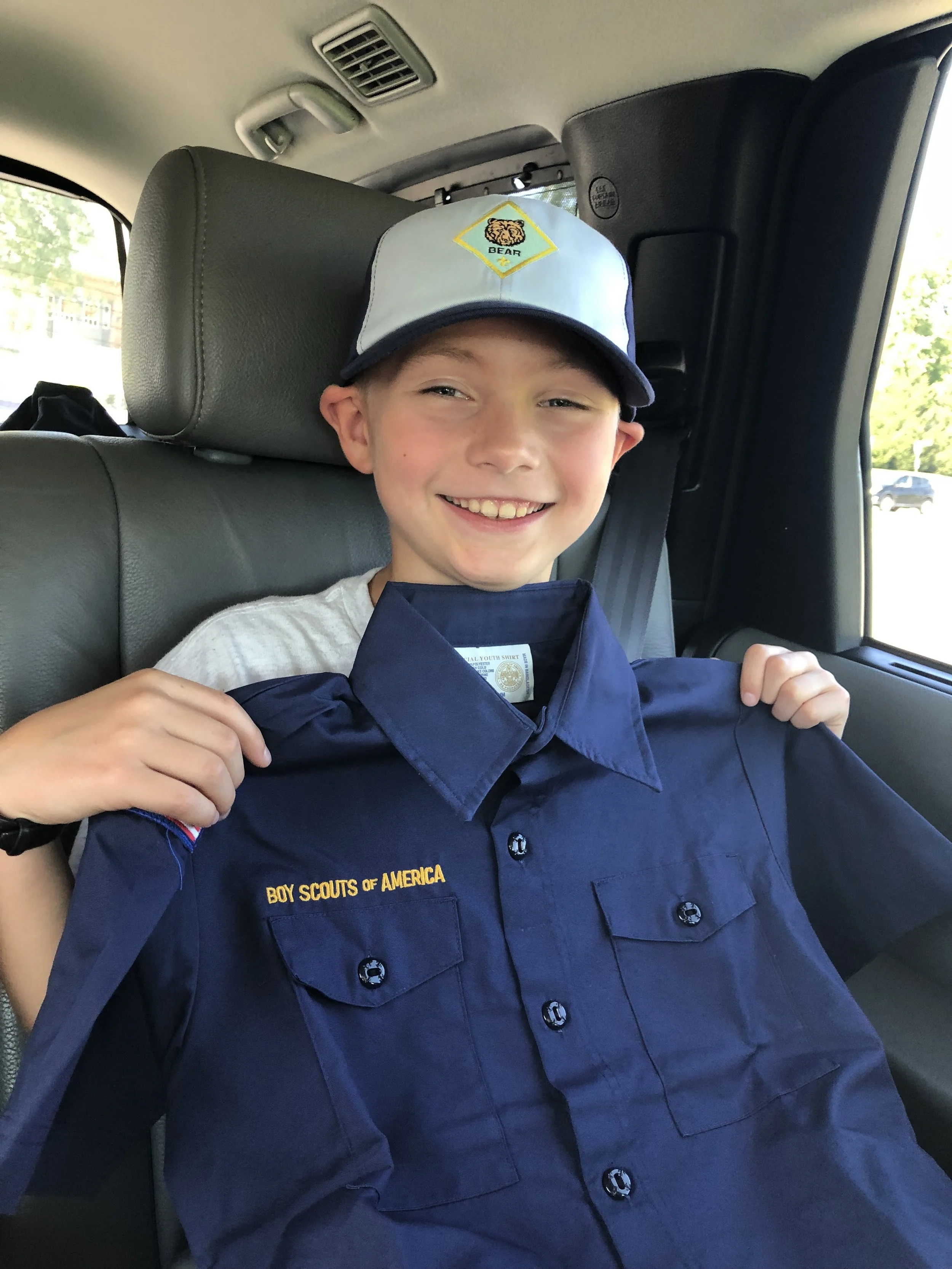
Boys Scouts is an EXCELLENT way to find people with similar interests!
Let’s say it goes well enough that meeting up again to see the same kids doesn’t sound awful. Meet up again and see who your kids gravitate towards. Take the time to meet their parents.
See what extracurricular activities they participate in. Is Henry on the swim team? Well, sign your kid up, too! Now you will see their family with the local park group and the swim team!
Knowing what their peers are into helps immensely - it sounds weird, but I 100% utilize scholastic book clubs to keep in touch with what’s currently cool with mainstream kids.
It’s going to be easier for kids to make connections with common interests - and if the 8-year-olds of the world are all reading Dog Man and your kid has no clue what they’re talking about, they’re going to have a hard time feeling included.
Related Reading: Using a free Homeschool Scholastic Book Clubs account to help you and your kids stay up to date with what’s cool on the social scene!
Meet Up in Real Life
Still going well? You can get the kids involved and make plans for a pizza/movie night at your own place, meet up so all the kids can get ice cream, etc.
The point is to move your relationship beyond the organized social groups and into something more real life and intimate where you can find connections.
This is where children's social skills and social development really blossom! Maybe an inside joke is created over a funny moment, or there’s a bond over both liking blue raspberry ice cream.
Homeschoolers like these things just like public school kids. Kids are kids!
Helping Older Children Find Connections
Older kids might have better luck and make friends with independent activities away from their parents. Sports games, hanging out at the mall, or getting lunch somewhere are settings where older kids can fend for themselves, but parents can still be nearby and unobtrusive as they flex their social skills.
Older kids need to find and experiment with their personal identity and sometimes that’s hard when parents are always around.
Parents, Make Friends Too!
Let's be honest, many parents of homeschoolers need real friends, too. We can also benefit from flexing our social skills to make friends with other adults.
One of the homeschooling disadvantages is that there is the potential for less adult interaction if you don’t go to social events that have other families. If you’re only taking outings as the homeschool teacher and not as the mom looking to make friends with other adults, it’s going to be hard and lonely.
Once you see the social linking pattern working with your children, wash, rinse, and repeat for yourself!
You can do this with every social interaction you have. Find a way to create another link.
Remember that the ultimate goal is to find a way to meet beyond the organized group or co ops and create personal connections that you can bond over.
What is Socialization?
General homeschooling parents shouldn’t be worrying about homeschooling socialization and believe that homeschoolers are socially awkward. Let’s explore this
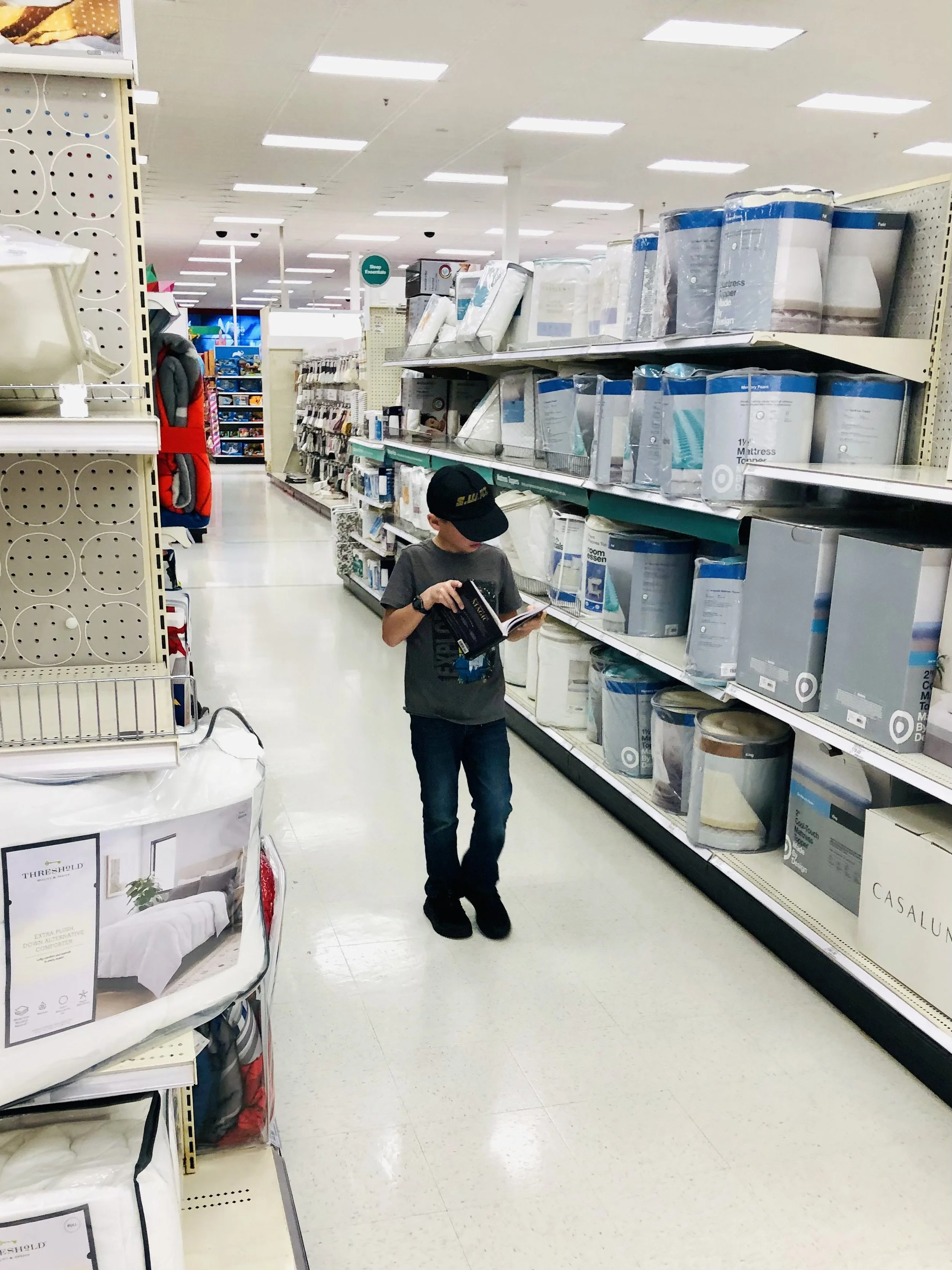
Reading while following Mom around Target… that’s normal, right?
Here's the definition of socialization:
socialization
noun
1. the activity of mixing socially with others
Example: "socialization with students has helped her communication skills"
2. the process of learning to behave in a way that is acceptable to society
Example: "pre-school starts the process of socialization"
Maybe the annoying references (example sentences) to socialization happening in school is what form our homeschool socialization myth? It's a social construct that's been washed over us.
Socialization Happens Everywhere (not just in school)

In 2022 I initiated Operation: Learn How To Win & Lose Nicely. Being a good sport is part of socialization! Emily barely LOST first place but WON the Overall Sportsmanship Award!
Socializing is as simple as knowing things such as social etiquette in a grocery store, checking out library books, or waiting in a ridiculously long line without melting down.
Socialization is learning how to act in society. That’s pretty simple.
These aren't skills that are restricted to school hours. They're present in everyday life.
No, we don’t yell “fire” in a movie theater. Yes, you should hold the door for others who are coming through. Don’t bump into others or step on people’s belongings, but if you do, apologize.
Seriously, socialization is a piece of cake.
Manners such as eye contact and pleases & thank yous will take you further than curt interactions and a lack of environmental awareness ever will. Most kids pick up on this stuff pretty quickly.
Worry About Their Connections
Parents shouldn't be worrying about homeschoolers not being socialized, they should be worried about their kids and being able to form connections with others.
Creating connections is about forming relationships with other people, allowing us to bond and be vulnerable. It helps us build those pillars of support when life starts crashing down. That’s hard work.
Ditching Socialization Worries and Teaching Social Skills Instead
Since it's easy to follow a formula for how to act in public, let's change the conversation from socialization skills to skills needed to connect with society.
Acting in public is standing in a line and not cutting to the front (socialization skills). Interacting in public is having a conversation with the person in front of you (social skills).
Creating connections isn't just an essential skill for homeschool families. While homeschool families need to take the extra steps to find community centers, organize play dates, and seek outside classes, any family that encounters a new school, moves to a new town, having a new job, a new class, or a new sport will need the same social skills.
When Things Aren't Working Out
If your kid is struggling to make friends even though you attend different co ops, participate in activities at the library or children's museums, and have regular meetups at the local playground with other homeschoolers, I would imagine it has more to do with their social abilities than effort.
Type of Schooling Does Not Determine Social Ability
Enrolling a child in school doesn’t mean they are guaranteed to make friends. Yes, being in school, kids will see their peers daily. But that doesn't mean they'll fit in or be accepted.
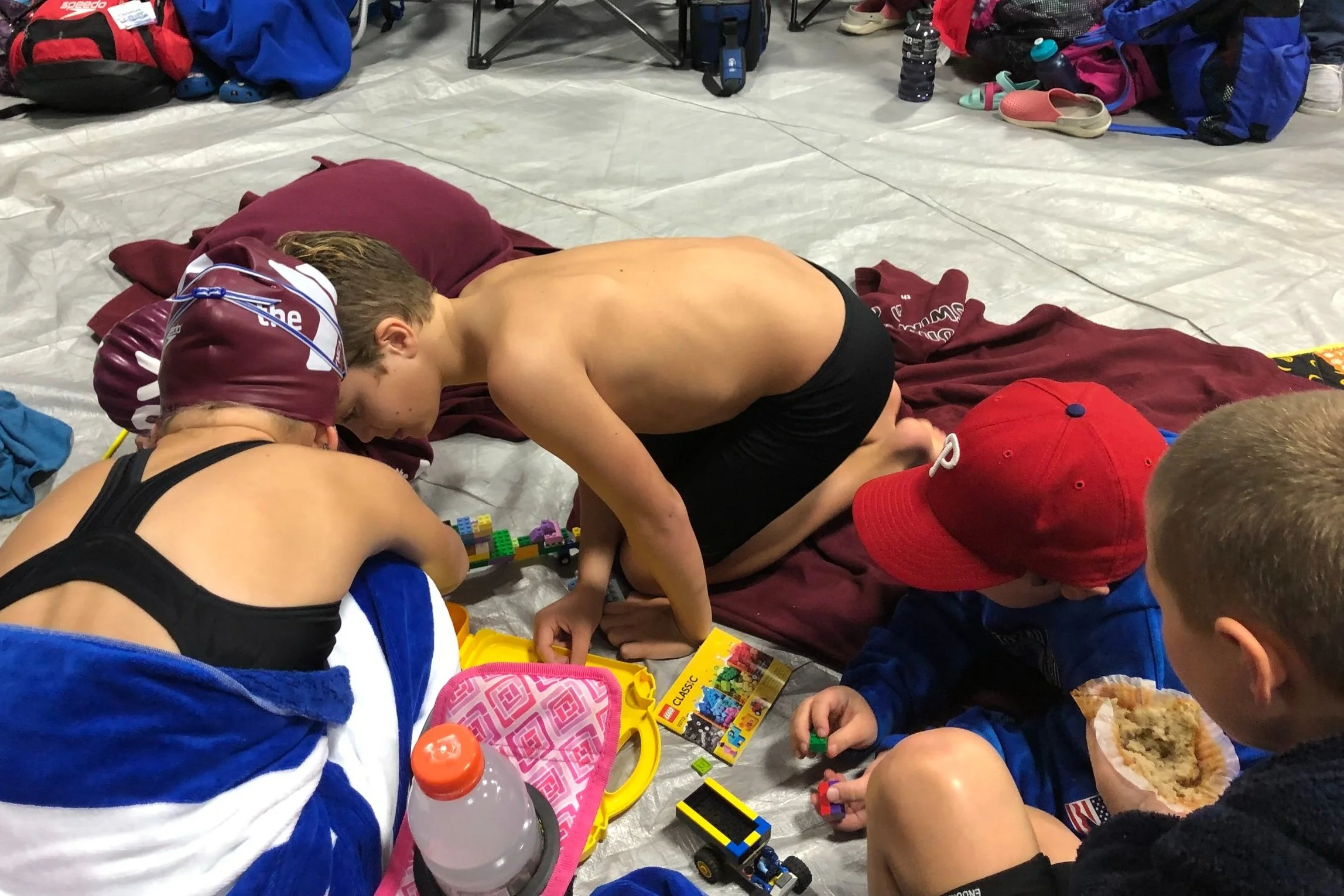
Our swim team has nearly 150 kids from all over the county & multiple homeschool families. No one can tell which kids go to which schools, or are homeschooled! Kids are kids.
This is where we breech the topic of social comforts and having differences in social abilities.
Everyone has differing abilities and skills in math, reading, writing, etc. Social skills are the same. Some need a math tutor; some need social coaching. There should be no shame in that.
Here’s the thing, everyone is different. Some people are fantastic conversationalists, and we find ourselves hanging on their every word or being coaxed into saying more than we intended. Some people are jerks and seem to thrive on making hurtful comments for laughs. Some people are hilarious, quiet, comforting, athletic, or weird. Yes, weird.
Being weird isn't bad, and it doesn’t change just because you are enrolled in a traditional school or are a homeschooler. In the homeschool groups that meet up, you will also find hilarious, quiet, comforting, athletic, or weird people. Yes, weird.
Weird
As a quick side note... the world needs more weirdness. These are the free-thinkers, the dreamers, and the innovators. Any jaunt into history will confirm this.
This word has a negative connotation and by definition, it just means that it's not the norm. Let's get deep... what IS normal? More importantly, why?
Accepting Differences in People
Having taught public school, having some experience with private school, and being a homeschooling family, the latter group of homeschooled children tends to be more open to differences in personalities and interests than the regular school world.
No, it’s not because all homeschool kids are weird, and birds of a feather flock together. Nope, they’re honestly just the same as their public school peers. Kids are kids. There are kind, compassionate homeschoolers and little jerk homeschoolers. Some kids conform to impress, and others proudly march to the beat of their own drum.
However, I would argue that most homeschooled kids are more confident in their likes, dislikes, passions, interests, etc., and usually accept that it's ok to be different from others. Generally, these kids get that it’s ok for others to do their own thing, with no judgment necessary.
I've found very little to no herd mentality that you’d find in organized schools (in my region, at least). Some have more influence for sure, but the social clique hierarchy constantly portrayed in media doesn’t exist in the same way.
Homeschooling Parents are Different
Homeschooling parents choose to go against the grain the day they withdraw their children from school. That mentality speaks volumes when it comes to feeling free to stand up to the social constructs of how people should act.
Homeschoolers create groups based on shared interests and lifestyles. There is little judgment, taunting, or lack of respect for those who have different ideals or abilities. You do you.
It’s more peaceful.
So, while I’m certainly not a 20-year veteran of homeschooling, and I have only practiced homeschooling my family in my region, I wholeheartedly advise you to stop worrying about homeschooling and socialization.
Be confident that everyone will be fine if you put in the work to get out and be consistent. Maybe your kids will need more social coaching than others; know it's ok.
Here’s What To Do:
Get out of your comfort zone and match the social needs of your child. Find a homeschooling group that does something that sounds interesting and show up. Then, try to link up from there.
Then, stand back and watch the waterfall effect happen. It will become more natural and more comfortable the more you work it.
Be Patient
Not everyone will be your cup of tea, and not everyone is looking for more friends. If it feels forced, start over. And again, and again, and again if necessary. It is a life-long process.
Love Them
That all being said, go love on your children. When they fall asleep tonight, make sure they know they’re loved. Remind them to be brave and to be kind. Then remind yourself to do the same.
Fresh Posts To Check Out