
Four Seasons Activities for Kindergarten and Preschool
View the corresponding resource, Four Seasons: Kindergarten & Preschool Science Lessons, in the shop!

Why Do We Use Activities To Teach The Four Seasons?
If I learned anything during my early years studying child development, it was that kids are always playing because that’s how they learn!
I remember being dumbfounded by some Early Childhood Education classes that had us create activities with popsicles and write complex lesson plans on states of matter.
Or the best, reiterating the need to have blocks available for children during physics lessons to solidify their grasp of gravity.
Uh, really? Are you really teaching a physics lesson, or are they playing? Let them play.
Play First!
By playing before teaching, your children will have concrete experiences to anchor their learning. Teaching the four seasons is multifaceted! It's nearly impossible to understand the coldness of snow and ice without feeling it for yourself. "It's really cold" - doesn't fly. Give them some ice.
No snow where you live? Use picture books! Kids learn through all kinds of experiences, even those lived through stories!
Use Intentional Play Activities For Learning The Four Seasons
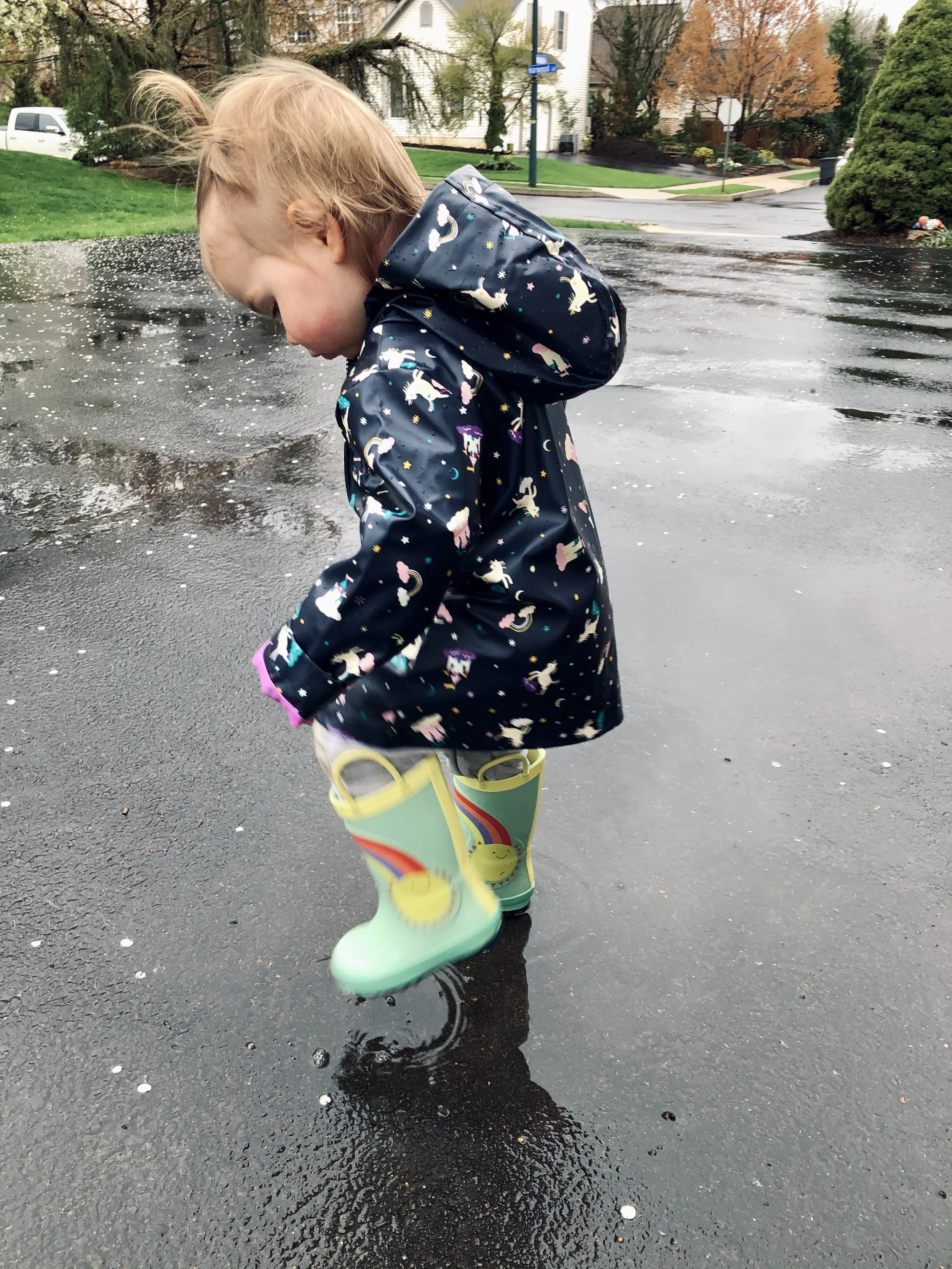
Toddler Emily out in the spring rain! Learning about clothes with the boots, jacket, and so much more!
It's generally accepted that young children should be able to differentiate between the four seasons at a relatively young age. Lucky for us homeschooling kindergartners and preschoolers, this can be a pretty easy yet significant science milestone to achieve with our kiddos!
The best way to cement the concept of different seasons is to have intentional play activities that allow them to experience the seasons in first a concrete, then abstract way.
Begin With Activities For Concrete Learning
People have unlimited access to the outdoors, and there is no better way to learn about the four seasons than by stepping outside to experience the weather of your current season! Besides, being outside is so much fun!
Get outside and explore the characteristics of the season. Talk about what you see and watch! Exciting things happen in stillness (if you can get the kids still... ha!)
Weather: hot, cold, snow, sun, rain, cloud types, etc.
Plants: trees & foliage, growing sprouts or harvesting pumpkins, flower buds or full blooms?
Animals: babies and nests or foraging for food, robins or bucks with full antlers
Try All The Different Seasons Activities!
Each of the four seasons offers a bit of magic - try some of these ideas!
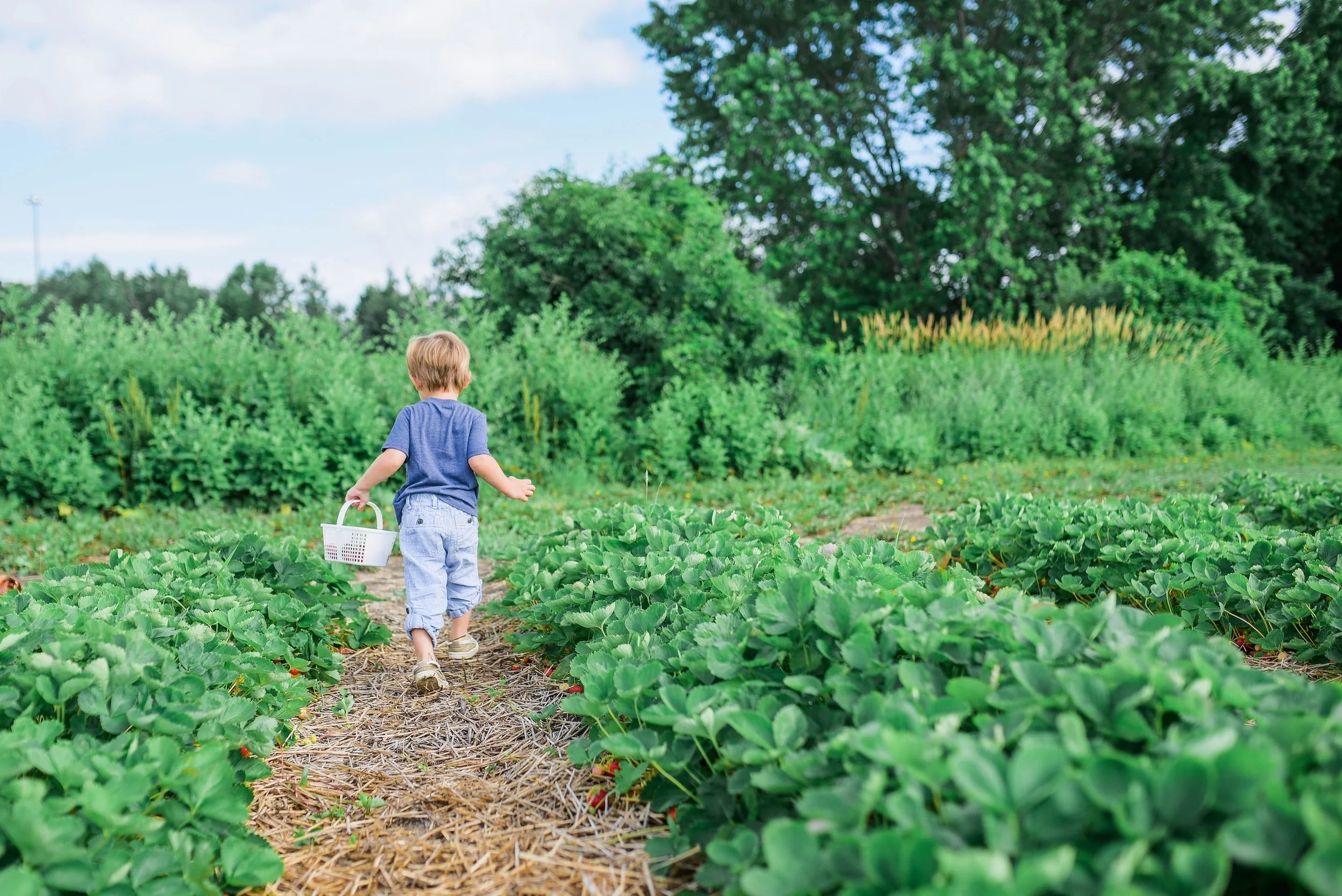
Spring: plant a garden, find bird nests, feel the cold water in the creek from the snow melt, splash in spring rain puddles
Summer: go swimming at the beach, harvest summer fruits and veggies, play in the sprinkler, watch fireworks on a hot night, drink iced tea or lemonade, make homemade popsicles or ice cream
Fall: visit a pumpkin patch, go apple picking at a farm, rake big leaf piles and jump in them, make a scarecrow for your yard, watch squirrels gather acorns, drink apple cider or pumpkin spiced drinks, bake all the pies
Winter: try ice skating, play in the snow, build a snow fort, put seeds out for winter birds, drink hot cocoa,
Read Books About Seasons
Don’t forget the magic of picture books! There are tons of books specifically about seasons - or simply read your child's favorite books and notice the setting in them! Are they winter stories? Are children playing outside? What are their clothes?
While you’re reading and noticing seasons within the setting, use the time to work on print awareness skills with your pre-reader! These cross-curricular moments happen all the time!
Seasonal Picture Book Lists - Take These Lists To The Library!
Keep a Nature Journal
Some families like to keep a simple nature journal where you and your child can draw pictures and practice noticing patterns as the year goes by. I'm horrible at drawing, but I assure you, kids don't care about your art skills! Model active learning - this is the foundation for note-taking as they get older!
We use Exploring Nature With Children for our Preschool Outdoor Science curriculum - I'll link that at the bottom of the post if you want to explore their site. It's a PDF-to-print curriculum.
Play Around With Seasonal Clothing
Dig into that closet and pull out your sun hats, snow jackets, shorts, and sweat pants! Seasonal clothing is a fantastic start towards reinforcing the differences in each of the four seasons. Don't forget boots and sandals! Make it silly!
Play a game where your child dresses up for the season. This is a great activity to have them use their senses to describe what they're experiencing with their bodies! Ask them questions that make them use their senses to get really engaged.
*Parent Bonus - you get to sift through the closet and find what doesn't fit anymore!
Dress Up Activity
Types of questions to ask while playing with clothes - feel free to lead them with clues during your conversation!
With these clothes on, does your body feel hot or cold?
Will this help warm you up or keep you cool?
Does the fabric feel light or heavy? Thick or thin?
Is this best for a hot summer day or a cold winter day? (see how the season names are peppered in with anchor descriptions of hot and cold?)
You can play silly yes/no games based on age that help kids learn the correct season for clothes.
Would you wear your swimsuit in the winter snow?
Should you wear these warm winter boots in the snow?
Would you wear a fuzzy snow hat on a summer trip to the beach?
Would you bring an umbrella on a walk outside in a spring rain shower?
Pepper in weather words with your questions once they have a grasp on what clothing is most appropriate for different types of temperatures.
What hat is best for keeping the bright spring sun out of your face while doing a gardening activity?
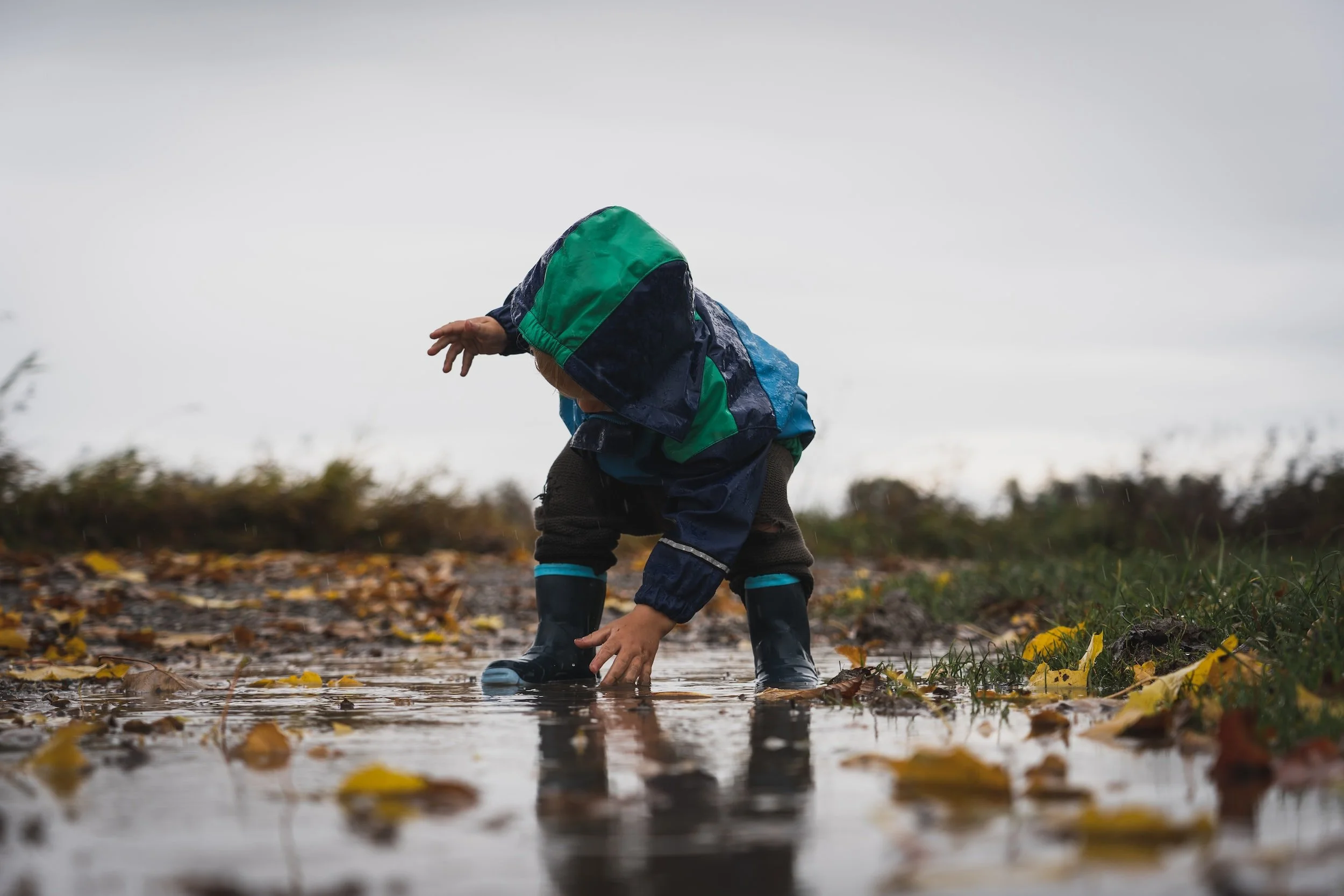
What shoes are best for jumping in puddles on a rainy spring day
What would you wear to play at the water table on a hot summer day?
Turn Knowing Seasonal Clothing Choices Into Abstract Learning
Through dress-up games alone, kids will grasp a tremendous amount! Variations in temperatures, variations in clothes, variations in weather, variations in seasonal activities, etc.
To help make that learning stick, take it abstract! This takes learning to a new level in the brain and has them apply learned concepts in a different way. Let's build up those synaptic connections!
Use Picture Sorts To Boost Brain Connections
I love having fun picture sorts that have kids flex their fine motor skills with coloring, cutting, and gluing. Picture sorts are quick and easy, but the brain power is incredible!
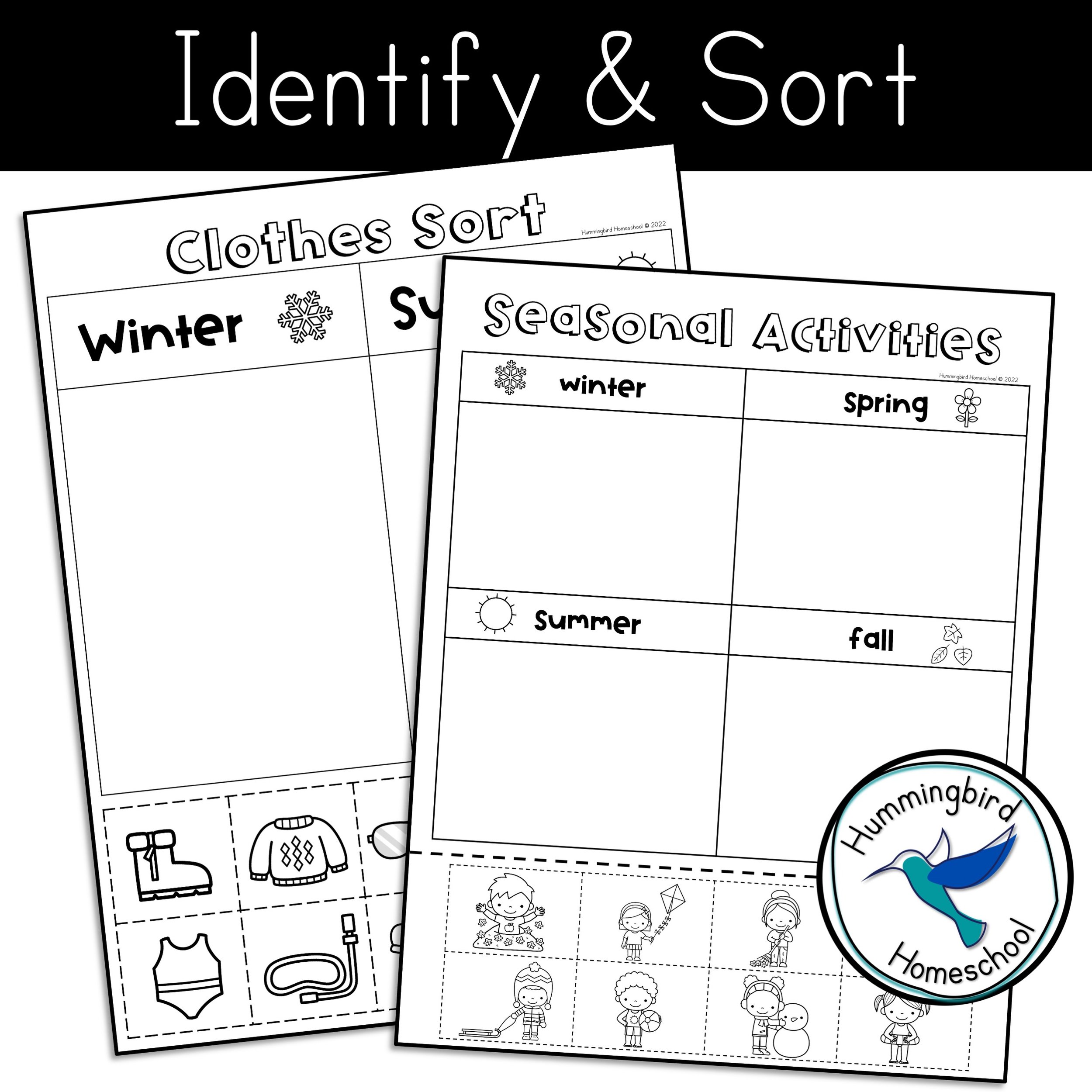
View this year-round resource, Four Seasons: Kindergarten & Preschool Science Lessons, in the shop!
Sorts are also great because you can print out the activity and have your child do it multiple times!
Every time they cut the pieces out, they get mixed around. This creates a novel experience every time! There's no way they will use the same pieces in the same order every time. This means that while the brain is creating recognition patterns between the clothes and the seasons, it is not completing the sort based on the pattern of which pieces are glued down based on a specific order (hat, boot, sweater, etc.).
You can print this baby out every few weeks to reinforce as necessary!
Simple Activities Reinforce Icon Clues for Different Seasons
As adults, we see a picture of a snowman and know it's a reference to winter. Hot cocoa? Definitely not summer. We talk about pumpkins, harvesting apples, or pies and turkey and know it's fall. We don't need the words literally spelled out for us.
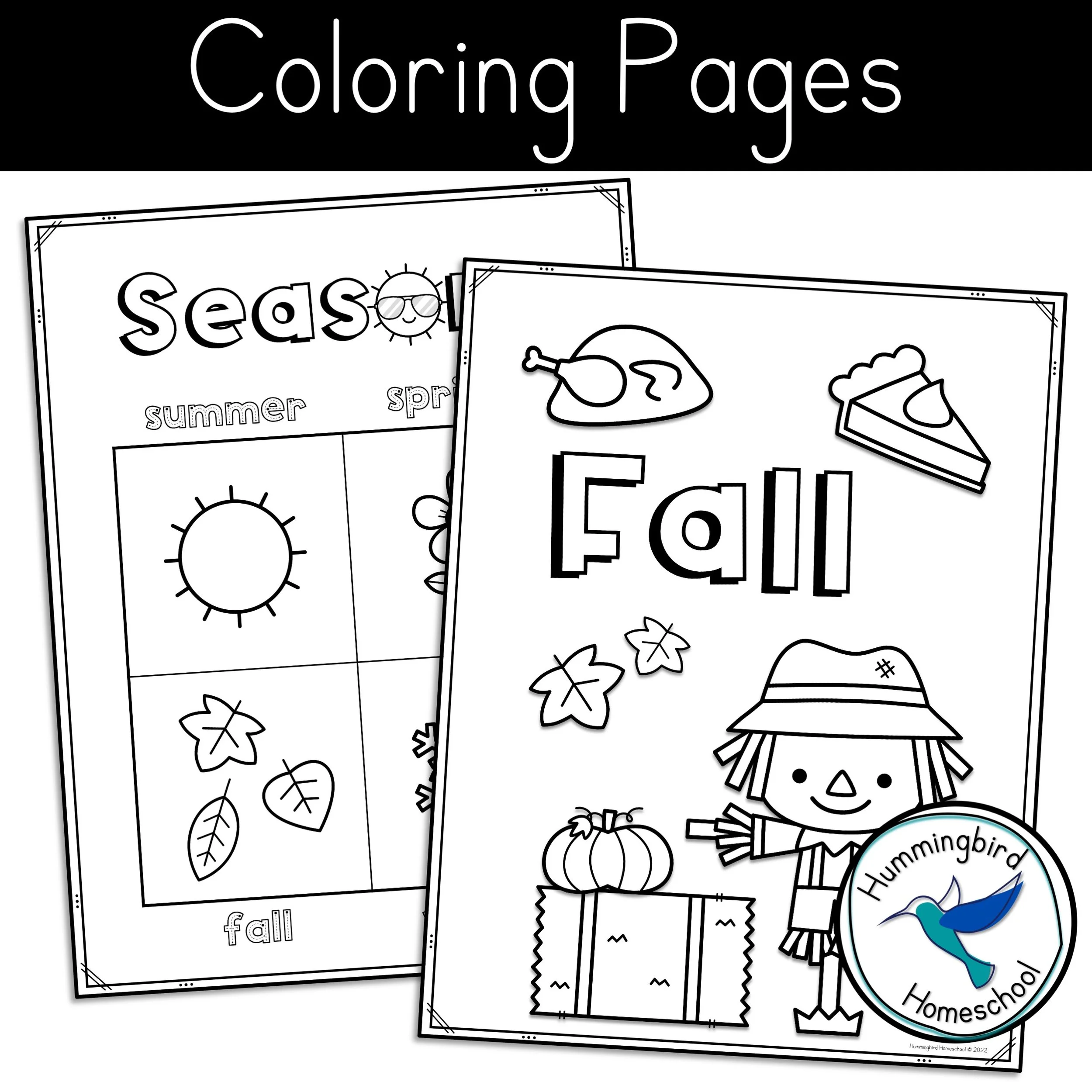
Fun coloring pages, BUT they also reinforce visual clues about specific seasons. Grab my science learning packet, Learning The Four Seasons For Preschool & Kindergarten Science for year-round learning.
Kids need to learn these subliminal cues, which can be taught seamlessly with coloring pages, puzzles, and other simple activities. There is zero need for instruction, it is fun for kids, and super easy reinforcement for homeschooling mamas - especially when you might need to teach math to an older sibling...
I promise you these are not fluff activities for littles! They are learning to read environmental print, so to speak, a fancy term for when kids "read" images as words (pre-reading skills, yo!)
Kids need to be clued into knowing society's different types of cues and icons for the seasons.
Teach The Four Seasons Through Arts And Crafts
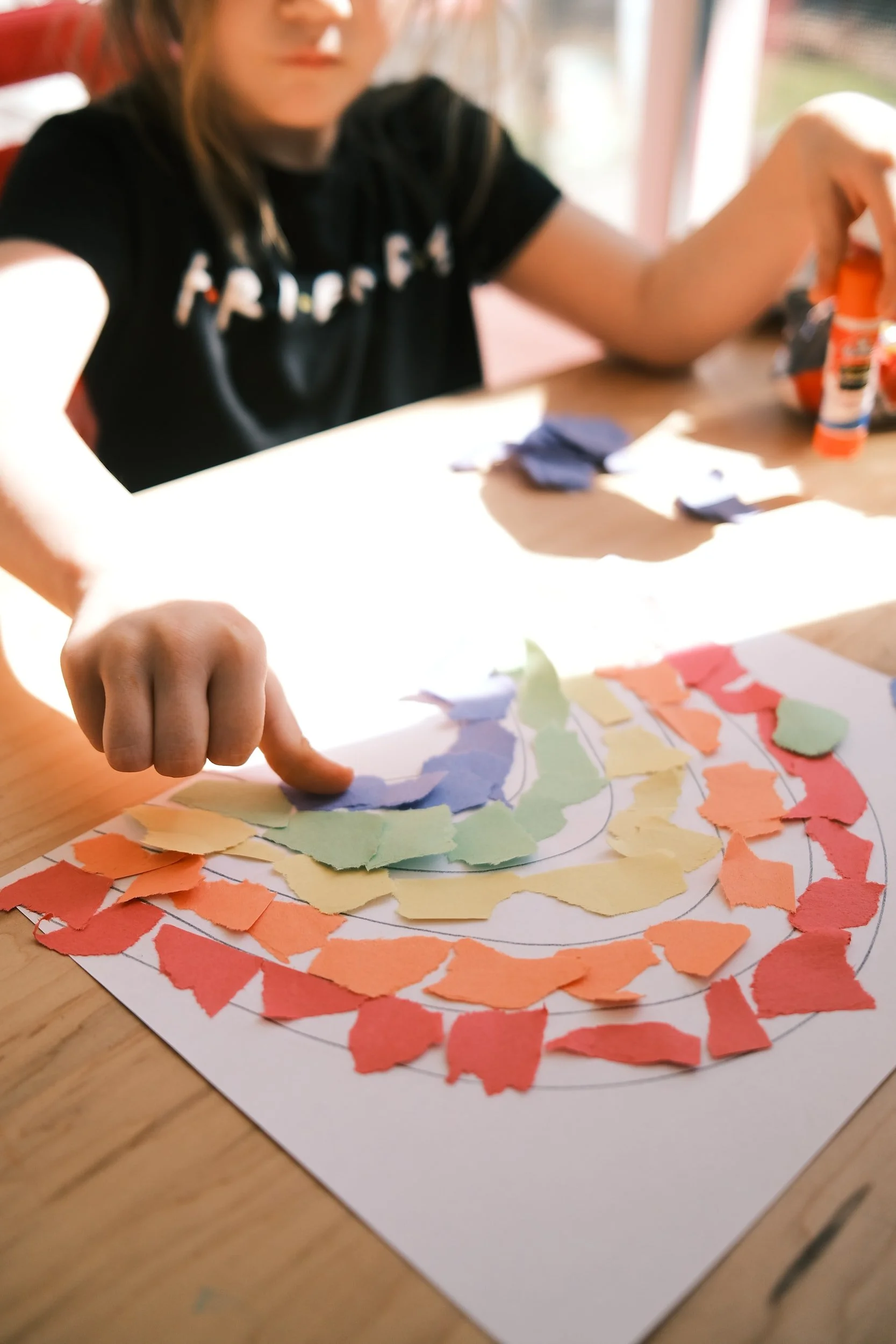
Crafts are also a fun, hands on way to reinforce spring, summer, fall, and winter differences.
In this house, I give the most basic instructions for art activities and never prepare resources for my children to recreate. Art is a time to develop ideas and expressions. Let them amaze you! My kids have always loved anything that involved finger painting!
Use cotton balls to make a snow scene when talking about winter.
Glue some tissue paper flowers to reinforce new spring growth.
Find a spring hummingbird craft for preschoolers (hint, I like this super easy pom-pom one)
Create a painting activity that depicts a beautiful summer day.
Rip construction paper leaves to make a fall tree that is losing its leaves
I am not a crafty person, so by all means, skip the hummingbird craft and I won’t judge!
Or… break out the paper plates, pipe cleaner, hot glue, tissue paper, cotton balls, food coloring and shaving cream, have your child finger paint, etc. and let loose!
Sure, these are activities for kids, but there’s no reason why you can’t join in and have some fun, too! The Pre K to early elementary years are for messes - embrace!
Teach The Four Seasons Through Compare And Contrast Activities
Once kiddos start to grasp the concept of what belongs to the correct seasons, they can differentiate abstractly between what makes sense (a scarf for winter) and what doesn't (a scarf for summer).
Sorts are a fantastic way to put concrete knowledge to use in an abstract way. They WORE the thick jacket in the snow and FELT the cold air. Now they're ready to recall that information and categorize it against a topic that doesn't make sense. Each of the four seasons is similar in some ways, yet totally different. That can be tough!
Winter weather is cold; summer weather is hot—spring activities versus fall activities. Sorts help kids physically and mentally categorize and catalog information in the brain.
Don’t forget to utilize picture books! Compare and contrast the pictures, what the characters are doing, wearing, and so on!
Summing It All Up!
Your kiddos will easily learn about the four seasons with time and guided discovery. It's very realistic to expect that a child can master this by their early elementary years and that it can provide opportunities for a whole lot of fun!
Remember
Play first! Kids need experiences to anchor their learning about the four seasons.
Create intentional activities about seasons for concrete learning
Utilize picture books when the season doesn’t match your lesson (Lists: spring, summer, fall, winter)
Provide abstract activities that reinforce concrete knowledge. Reinforce your teaching with my Four Seasons: Kindergarten & Preschool Science Lessons, in the shop!
Have fun! Remember that just as it takes time for the seasons to change, it will take that much time and more to apply the learning.
Further Resources:
My Favorite Preschool Science Curriculum
When heading outdoors for intentional learning, it is SO helpful to have a structured guide. Willy-nilly outside time is imperative, but when you want it to feel productive (for the adult, not the child), a structured sequence to your fun adventures is priceless.
I love the preschool and early elementary science curriculum, Exploring Nature With Children by Raising Little Shoots! I had my PDF version printed and bound so it was easy to look through, reference, and grab for on-the-go learning.
It is predominantly open & go, has book lists, questions to ask, what to notice by the week/season, is reusable, can be started at any time, and is pure amazingness.
Play!
Play is important. If you disagree, please read these for the sake of every child (they need educated advocates!)
Video From Harvard University: Play in Early Childhood: The Role of Play in Any Setting
From American Academy of Pediatrics, 2007: The Importance of Play in Promoting Healthy Child Development and Maintaining Strong Parent-Child Bonds
From EdSource, 2021: Why child’s play is serious business in early education
From The Hechinger Report, 2022: Want resilient and well-adjusted kids? Let them play
From Parenting For Brain, 2022: Importance of Play in Early Childhood (9 Benefits & Infographic) - The references on this post are fantastic!




Use these color words worksheets to help your kids learn to recognize, read, write, and spell the color words!