Easy Ways to Boost Listening Comprehension

When starting younger students on their preschool and kindergarten journey, listening comprehension is one of the most important yet often overlooked skills to teach.
Solid listening comprehension skills lead to good communication and are a stepping stone to reading comprehension.
What kind of skill is listening comprehension?
Being far from just hearing, listening comprehension is the ability to understand the words being expressed in spoken language and being able to relate to them.
Listening comprehension skills are what comes before comprehension skills that require print input. This makes listening comprehension a super important skill - one of the essential Big Five skills required for pre-reading.
What is the importance of listening comprehension?
When we hear a story or take part in a conversation, we should be able to interact and respond. This means that we can understand what we hear in a way that allows us to remember what we've listened to, have discussions, repeat the information back (retelling), and ask questions about it.
When we hear spoken directions, we must understand them to complete the task sufficiently.
Without solid listening comprehension skills, communication suffers. This opens the door to confusion and misunderstandings, which can escalate to anxiety or becoming withdrawn or angry.
What does good listening comprehension look like?
With good listening comprehension skills, students should be able to hear something and appropriately:
remember what they hear,
discuss what they hear,
retell what they hear,
ask related questions
How do listening comprehension skills develop?
We actually start this skill as soon as we're born! Babies are constantly synthesizing and learning from information that they hear.
Think about tone of voice, pauses in speaking, the rhythm, where the emphasis is, etc. We may not be thinking about these things, but we generally understand them.
The tone goes up when someone is asking a question. The voice (usually) gets louder with strong feelings. These are all tiny clues that help us understand what we're hearing.
Why are listening comprehension skills linked to reading comprehension skills?
Since we begin listening from birth, it's generally much stronger than kids' abilities to understand print when they first start reading.
Decoding Overshadows Comprehension
It takes so much effort to decode the words when first starting to read that the meaning of the text is often overshadowed. Often, this is where struggling readers get stuck. Most early reader books require super basic words, so trying to have any storyline can often be a stretch.
Model Comprehension Skills
It's important to continue with listening comprehension because we can model for these early learners how we both read and understand the text.
Along with print awareness, students need to understand that print holds meaning. So, we use and build their listening comprehension to help bridge and teach them how to gain meaning from the text as their brains work to remember what letter sounds blend together or understand the context of an unfamiliar vocabulary word.
4 Types of Activities to Boost Listening Comprehension
There are lots of fun ways to develop strong listening skills! What I absolutely love about teaching littles is that they learn through play - so we get to play, too! There is zero need to talk at your child all day long!
Here are four fantastic ways to strengthen students' listening skills:
1. Play!

Yep! Play word games, sing songs, be silly! Hedbanz is a fun game everyone can play, and we like to use All About Reading's PreReading books with their fun word games. I'm pretty lame about coming up with rhymes and guessing games, so I 100% rely on the workbook lessons.
Here's a super fun PDF game from All About Reading that works on listening comprehension - I promise there will be giggles! There are cards where you ask your child questions, and they are supposed to respond with "Mashed Potatoes." The listening part comes in because you'll know they understand what they're hearing when they hear your questions and realize that "mashed potatoes" is a totally ridiculous answer.
Be Silly
When I first used All About Reading PreReading with my oldest daughter, I used Ziggy (the zebra puppet that comes with the PreReading bundle), and while I hated strongly disliked using a puppet, she absolutely ate it up. Ziggy has since disappeared, but I still use everything with my current preschooler and we still get fits of giggles from the games.
I honestly think Ziggy made it better (as much as I didn't like using a puppet). It was just more silly, and that is exactly what little learners need. I try to use voices now, but it's really not the same. I never thought I'd say I missed that Zebra, but I miss Ziggy for my preschooler's sake.
2. Talk More - Boost vocabulary, boost comprehension!

Students have to understand the words they hear to understand the main idea of what they're listening to. Zero comprehension is happening when the words are foreign.
Use big words, but take the time to define the new words for your child. It's as simple as a quick pause to explain what a new word means. There's no reason why children should be limited to simplistic, boring vocabulary
Using your own words in conversation to expand vocabulary is extremely effective and an easy way to boost comprehension. Here's a great explanation with examples of using the conversational method for comprehension and building vocabulary.
3. Read Aloud - with a twist!
Read, read, read... but get your child involved! Don't drill them, but create a book club type atmosphere when you do a read aloud. The conversation will allow you to test their comprehension but in a ninja-like way.
Oh boy! What do you think will happen next? (making inferences, predictions)
Who was your favorite character? Why? (story structure, character development)
Did you like the ending? Would you add or change anything? (analyzing text)
Can you tell Dad about the story we read today? (retelling)
Don't forget to talk about unfamiliar words you read. As talked about earlier, seize the opportunity to use the conversational method as a chance to boost their vocabulary.
4. Listen to Books Together
As of writing this, I have 173 titles in my Audible library! And I cheat... I get collections that have multiple books in them! Listening to books aloud with my kids has become one of my most favorite things in life. If we're driving anywhere for longer than 5-10 minutes, you can bet we're listening to a book!
My older kids weren't ready to read Harry Potter - so we listened to the entire series! Also, I could not fathom reading aloud all of those books...
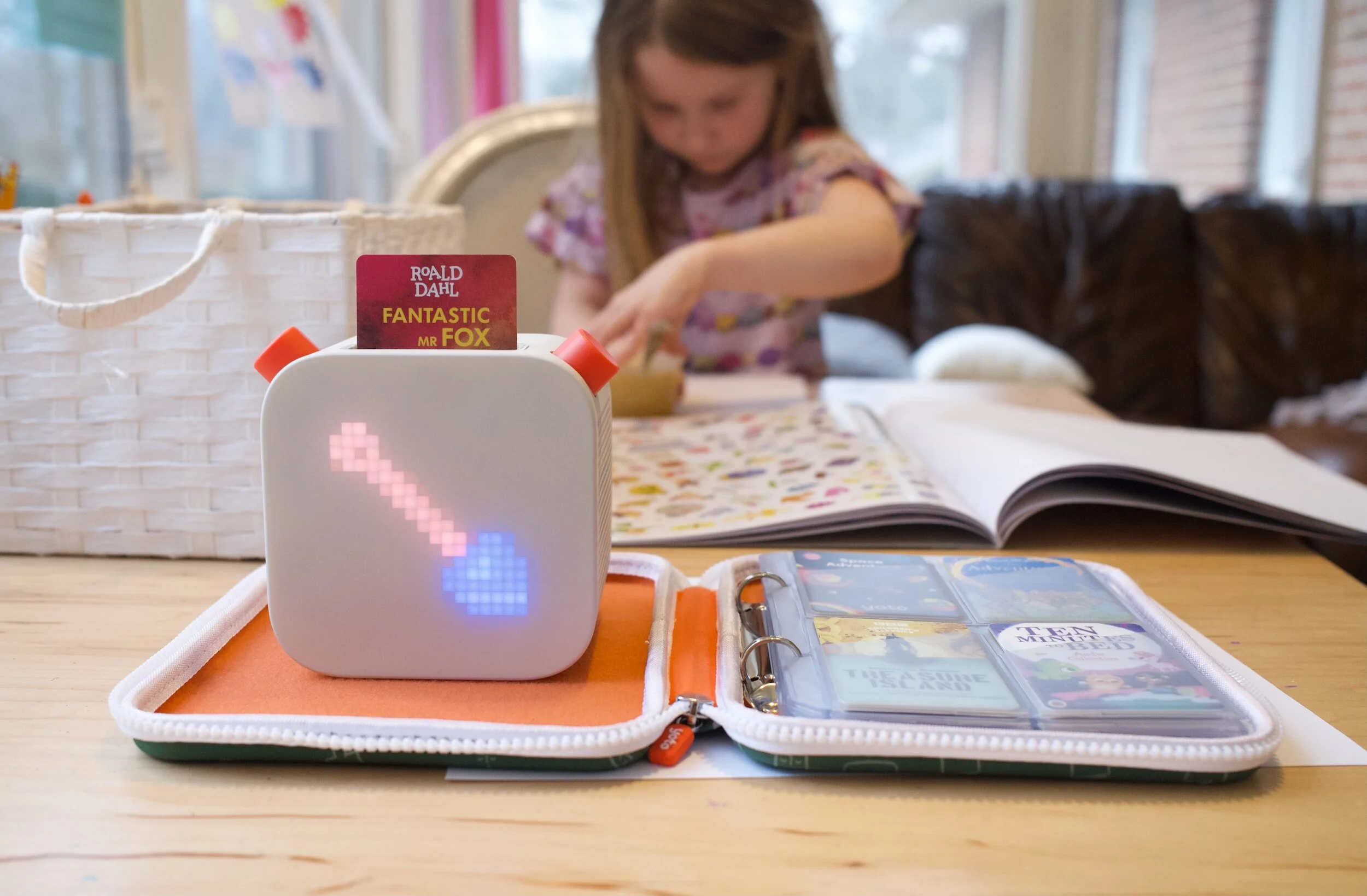
I’ve never tried this Yoto Player, but it’s a portable reader, clock, speaker, etc. It looked super cool i the picture so I looked it up on Amazon.
Make More Advanced Books More Accessible
Listening to audio books is a fantastic way to give students a story beyond their level and share an experience with them. We laughed together, were shocked, and experienced the stories simultaneously - plus, they had me to help explain complex storylines and new vocabulary.
There are many collections of well-known picture books suitable for preschool-aged children. They don't need the pictures; they can create mental images! It can also be fun to read the book and compare what they thought the pictures might have looked like to the reality of the book.
Wrapping It Up
Listening comprehension is the ability to understand and respond or interact with spoken language. Having this skill helps with communication throughout life and aids in learning how to have solid reading comprehension.
There are four easy ways to boost your child’s listening comprehension:
Be playful with words and language
Talk to help expand vocabulary
Read aloud and interact with the text
Listen to stories aloud together
Enjoy this time! Read, play, and have some fun!
Check Out These Other Posts On Reading!