Secular Language Arts Homeschool Curriculum: Our Favorites!
Our Family’s Curriculum Choices for Language Arts
Language arts is a core subject that is taught from kindergarten through high school.
In this post, I will talk about the scope and sequence of language arts in our homeschool and the secular language arts homeschool curriculum we've used.
Another note: secular just means it is a non religious homeschool curriculum. I have more on that in other posts, but we tend to choose faith-neutral curricula.
We don’t use a complete language arts program but instead piece it out. In this post I'll cover what we use for:
Reading instruction
Reading comprehension
Writing curriculum
Handwriting
Grammar rules
Vocabulary
Spelling curriculum
If you want subjects other than language arts, you can check out my massive (growing) list of secular homeschool curriculum options if you feel like getting overwhelmed by seeing 10 bajillion options.
Reading Instruction
Curriculum Discussed:
Pre Reading
Around the prek age, when my kids are ready to begin letter sounds and recognition, we like to play with words, sounds, and sing songs.
I have used All About Reading Pre-Reading to help with letters, letter sounds, and basic pre-reading skills that are needed before jumping into reading instruction I really like the rhyming and word games (like syllabication) from the books, but I don't find the letter lessons that helpful because they get that from alphabet games.
Helpful Links:
Complete Reading Instruction
Once letters & sounds (basic phonemic awareness) are grasped, I use All About Reading Level 1. I don't think it really reinforces the smoothness of blending sounds, but there's a quick workaround for that!
I start AAR Level 1 and Teach Your Child To Read in 100 Easy Lessons at the same time. I use this text simply because it does a really good job of reinforcing blending the sounds and not chunking things together and sounding like a robot. I usually drop the 100 Easy Lessons book once blending is the norm for sounding words out.
Helpful Links
Don’t Stop Reading Instruction Prematurely!
We continue All About Reading for every level, all the way through Level 4. As a former teacher, I cannot stress the importance of finishing reading instruction even after it seems like your child is a good reader!
If you quit early, you are robbing them of instruction that will help when vocabulary advances. They need those tools for advanced decoding and spelling - don’t quit early and stunt their growth down the road. In schools, reading instruction continues through 4th and 5th grades!
Helpful Links
Trust the curriculum
All About Reading doesn’t add fluff to the end, they end when a child has truly been exposed to all the necessary lessons to be a successful reader at higher levels.
It has really set a solid foundation for my kids to be excellent readers! They can sound out any word, and their confidence is amazing!
They loved the short stories, and I love that the lesson plans are mapped out with very little prep time from me. Lessons were 20 minutes a few times a week.
More Resources My Kids Love
As for other language arts tools, were given BOB books that my 4-year-old has started reading, but I don’t count that as a curriculum… she loves grabbing them to read when her older siblings are reading. She’s also not dyslexic, that I'm aware of. Anyway, I linked them in case you want to check them out.
Helpful Links:
Reading Curriculum for Dyslexic Learners
While this reading curriculum is fantastic for any child, it is AMAZING for dyslexic learners who need more than just visual learning for reading instruction.
I specifically chose All About Reading because it is the best choice for an Orton Gillingham (OG) reading curriculum so I have no experience with other curricula. We specifically needed OG to mitigate Dyslexia. All other beginning readers will benefit. It sets a solid foundation!
Helpful Links
Reading Curriculum for Gifted Learners
While we’re at it, I use the same reading curriculum for my gifted learner.
We accelerated the lesson timeline and typically finished 2-3 lessons per day. We did not complete every activity, and he generally wanted to skip the games, so we flew through the lessons.
While he was super fast with the lesson, I didn’t rush the overall timeline for completing levels. I supplemented with LOTS of reading aloud and finding interesting books at the library. He started AAR with Level 2 at 6 years old, and we finished AAR Level 4 when he was 9.
He devoured books with Audible and Epic! that were above his instructional level and it motivated him to learn how to read harder books.
Truly, All About Reading is the cat’s pajamas and works for every child! I wish they used this in schools!
Helpful Links
Studying Literature After Teaching Reading
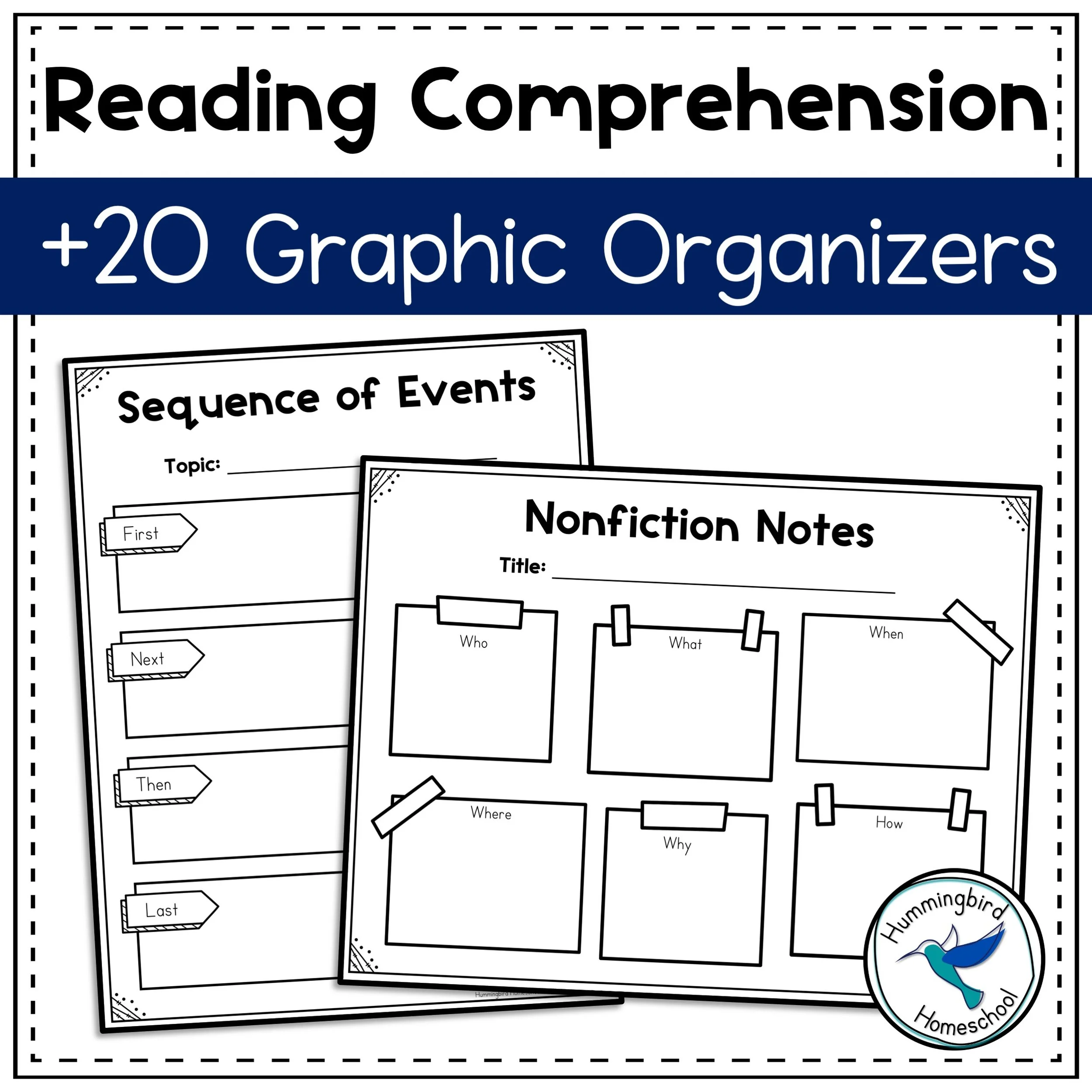
We use these reading comprehension graphic organizers with so many books and reading passages! Super fun, and perfect for improving reading comprehension for fiction and nonfiction.
Once All About Reading Level 4 is done, we move on to literature studies, where I really hone in on reading comprehension. Until last year, we had been winging it, and I’d been heavily relying on my teaching background. Then I wised up and made some tools to help us stay organized!
I have graphic organizers that we use with books, and I implement Socratic methods for discussion, but I have been craving a book list.
This year I plan to start Jacob's Ladder (Affective) for reading comprehension (and social-emotional skills!) plus Exploring the World Through Story for a combo of literature, poetry, humanities, geography, social studies, and writing. As the kids progress, I'll write about our experiences!
Helpful Links

He’s done it! Finished All About Reading Level 4 and was sad there wasn’t a Level 5!
Writing Instruction
Curriculum Discussed
I'm a firm believer in waiting to introduce any lessons on the writing process until kids have a solid foundation with handwriting and letter formation.
When their little brains are trying to remember how to form a letter, how are they supposed to also figure out spelling, sentence structure, idea formation, etc., and NOT feel frustrated or intimidated? It's too much to think about!
Handwriting: Print and Cursive Instruction
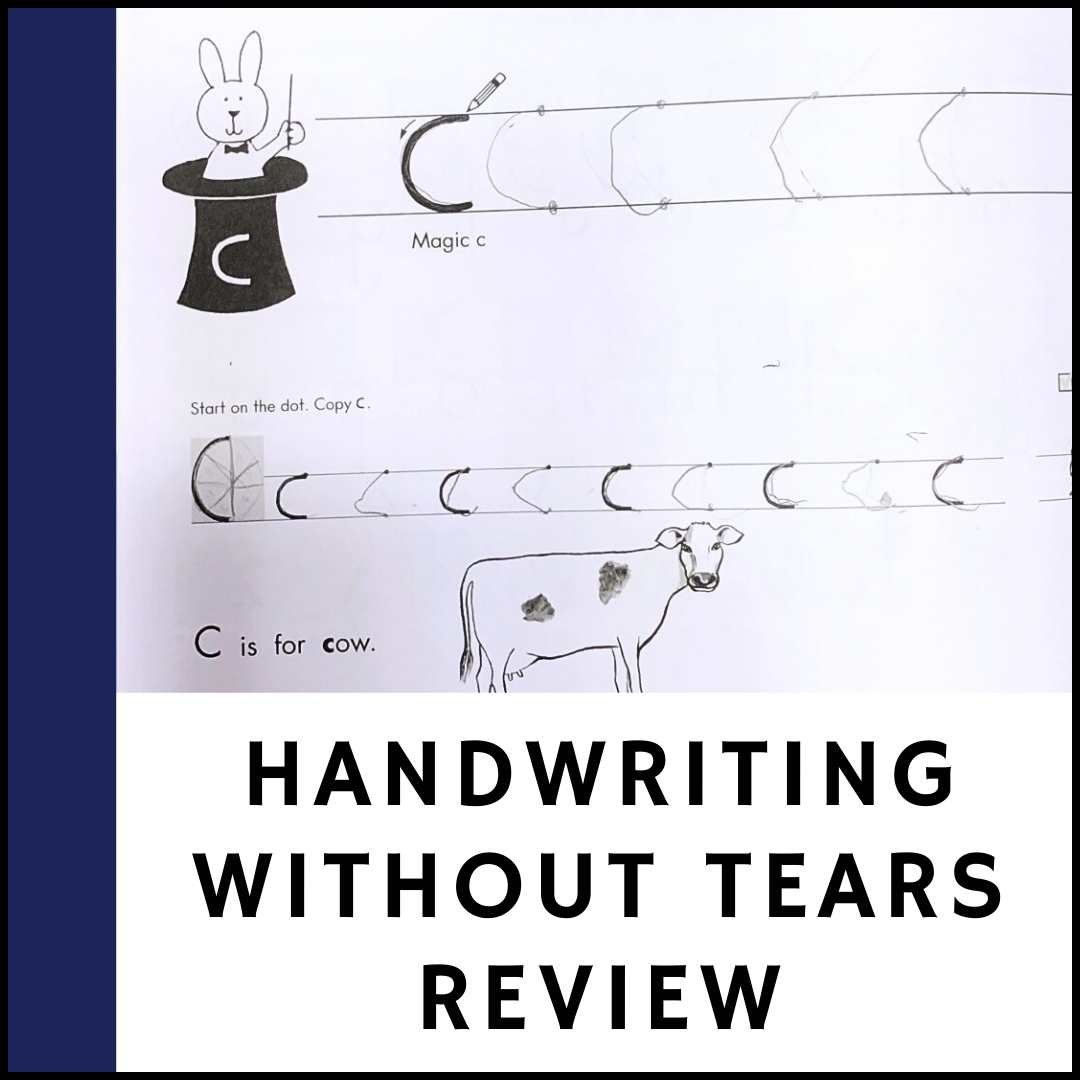
Around 4 or 5 years old, I start with Handwriting without Tears. It is a fantastic program that grows with each grade level. I will passionately recommend it to anyone that will listen.
We start cursive writing around 6 or 7 years old.
Here's my Handwriting without Tears review and links to the books/levels

She’s ready! Time to start Handwriting Without Tears and learn proper letter formation!
I have tried WriteShop writing curriculum for levels A and B and didn't love it. It wasn't a bad curriculum, I just didn't stick it out. If your child has a desire to write at a young age, it is very gentle and fun. I would highly recommend checking it out!
My older kids didn't want to write, but my youngest is currently obsessed with writing so I'll probably pull it back out and give it another go!
Around 7 years old we start writing assignments with friendly letters. Find a pen pal, hello Grandma! There's no specific homeschool curriculum for this, but I'm happy to help :)
Helpful Links
When my kids were done with All About Reading, around age 8, we started the writing curriculum IEW: Structure and Style for Students (Institute for Excellence in Writing).
I. Love. It. My kids like it. We do the video lessons, and they are blowing me away with what/how much they're writing! It starts gently, and there's been zero pushback for writing lessons.
I’m not sure how it’ll stack up for creative writing, but that’s easy enough to supplement with my own lessons or Outschool.com.
Thoughts on Brave Writer
I tried to start with Brave Writer, but I couldn't stick it out. We tried their self-guided, year-long course that had lessons tied to literature (Dart).
They do have live online classes! The online classes are hard to get into, but each course has online tutors that offer encouraging feedback to help students write with confidence.
Not to toot my own horn, but it's how I taught writing in public school (and got in trouble for it) so I didn't want to pay for a system that mimicked my own philosophy and system.
The program is very gentle, promotes waiting for instruction, and really helps children to find confidence in their own voice.
I would 100% recommend Brave Writer to anyone that lacks confidence in teaching writing or has struggling writers! Mine are not struggling and don't lack confidence so it was unnecessary for us.
Thoughts on Night Zookeeper
On another note, we tried Night Zookeeper, and both my daughter and I HATED it. It was weird to pinpoint what we disliked to much. She cheated the system and didn’t learn anything, plus she hated the voice. It was a total waste of LOTS of money. Boo.
On that note, they have an affiliate program so there are LOTS of glowing online reviews with affiliate links. It sucks. Don’t fall for the marketing, skip the Night Zookeeper train.
Spelling Instruction
Curriculum Discussed

My kids love spelling with these fun pages for practice! We use them with the All About Spelling lessons, but they can be used for any list!
Fun Spelling Worksheets for any list of words!
We start All About Spelling when we finish All About Reading Level 2. I am just as passionate about this spelling program as I am about their reading!
The process of reading is called decoding - you are given the letters, have to remember what they sound like, then blend them together.
The process of spelling is called encoding. You have to take the word (mentally), segment it into sounds, remember what letters create those sounds, then physically write them down. It's more work for the brain!
There is no reason to introduce spelling before a solid grasp on beginning reading is established.
After with finish AAS Level 3, we actually stop spelling instruction until we finish the reading curriculum (level 4). When reading is done, we pick up with All About Spelling Level 4 until the curriculum is finished.
Spelling is never a frustration or an issue this way. It's slow in the beginning and super fast at the end!
Grammar Instruction
Curriculum Discussed
We started with Grammar Galaxy when they were early in their All About Reading journey, then stopped after the first book. It is story based and was a lot of reading for me. I didn't enjoy it, but the kids did.
Once we started with IEW for writing, I started Fix It! Grammar. So far it is going really well and the kids like how fast and easy it is. They do a page a day, and they seem to be retaining the information well. It’s like a copywork sentence, but they’re actively engaged in thinking about the form and function of the sentence. I like that.
I supplement grammar with Mad Libs. They're honestly the best way to get kids to remember basic parts of speech. The kids love them, the writing prompts are silly, plus they're fast and easy!
Vocabulary Instruction
Curriculum Discussed
My kids devour books, which didn't start until they were around 8 and 9 years old. Previous to that, I read aloud constantly (I love children's novels!) and listened to millions of books on Audible. We still listen to books nonstop, and they really enjoy the Epic! app for books.
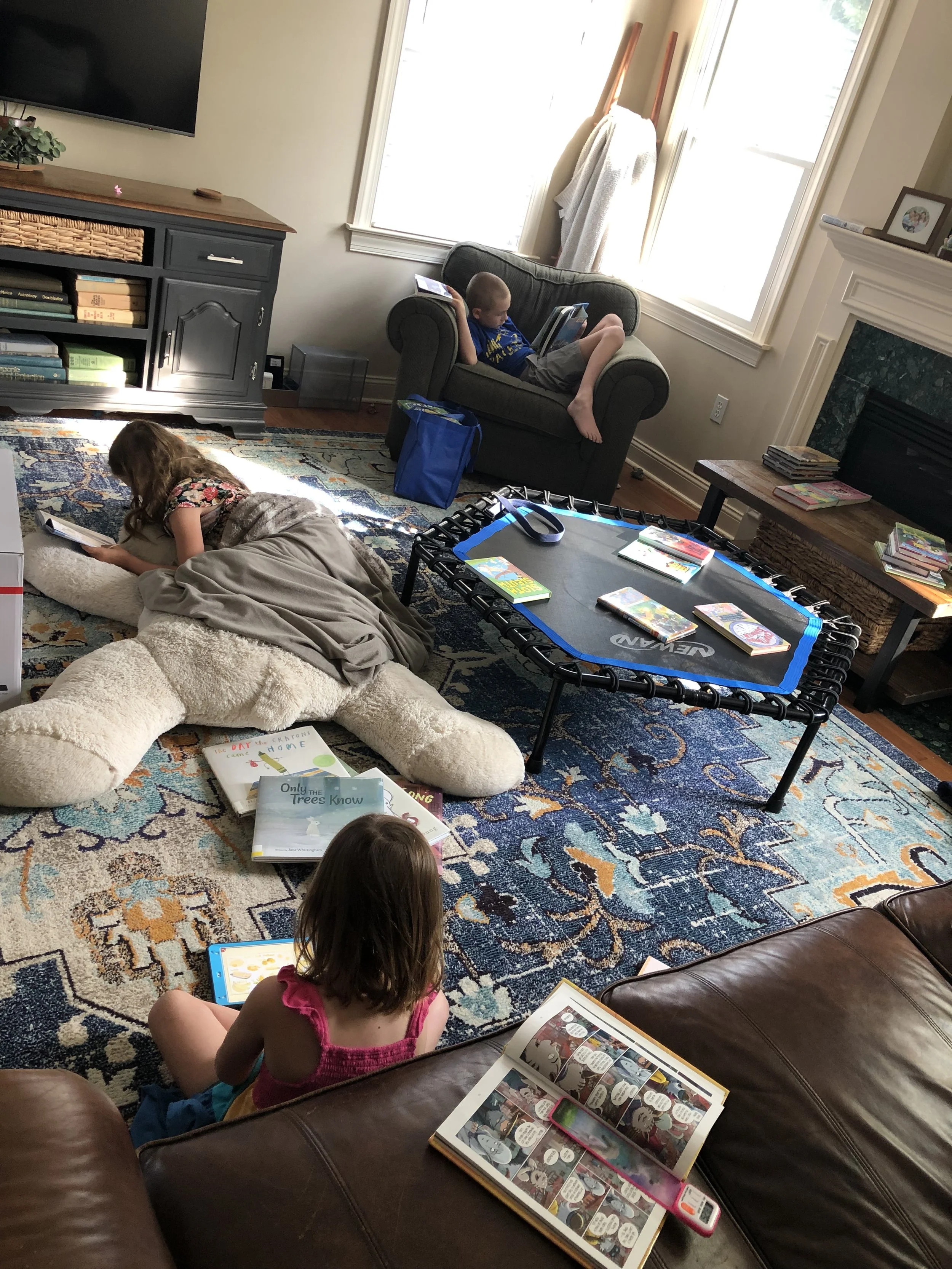
Our library is just waiting for the day we lose our books… we check out bags full!
All of this exposure to books and stories has led to my kids having pretty advanced vocabularies without any formal language arts curriculum!
For formal instruction, I started with Wordly Wise 3000 because they were so high and my kids hated it. It was pretty boring, and I got a lot of pushback. The grade levels were challenging so it would be great for kids gifted with language that actually love words and learning vocabulary. Mine don't!
I took it down a notch, and we now use Scholastic 240 Vocabulary Words Kids Need to Know. The vocabulary words were pretty easy, so I upped my kids by 2 grade levels, and it's been fine.
Curious about other homeschool curriculum offerings? Here are a few more homeschool language arts curriculum options to check out!
For a ginormous list and many, many more language arts curriculum options, check out my comprehensive (growing) list of secular homeschool curricula! The list covers all the topics from core subjects to recommendations for gifted and twice-exceptional kids!
Secular Language Arts Homeschool Curriculum
Michael Clay Thompson Language Arts: This program provides a comprehensive, in-depth study of grammar, vocabulary, writing, poetics, and literature.
Logic of English: It offers a multi-sensory approach to reading and spelling, targeting different learning styles.
Exploring the World Through Story: This program follows a holistic approach to teaching literature by focusing on the connection between language and culture.
Secular Reading Homeschool Curriculum
Reading Eggs: An online program that makes learning to read interesting and engaging for kids, with great online reading games and activities.
Explode The Code: This is a systematic and explicit phonics program designed to help students learn to read.
Hooked on Phonics: This is a proven program designed to help kids learn to read using digital and physical learning materials.
Starfall: This platform offers a variety of online games and activities designed to facilitate early reading.
Secular Handwriting Curriculum
Really, you can pick up any workbook off Amazon… but Handwriting Without Tears is the Bees Knees.
Handwriting Without Tears: A curriculum that uses multi-sensory techniques and consistent habits to teach handwriting.
Zaner-Bloser Handwriting: A comprehensive program that covers handwriting instruction from pre-kindergarten to 8th grade.
Secular Grammar & Vocabulary Homeschool Curriculum & Apps
Shurley English: A unique jingle-based method to teach grammar that is both engaging and effective
Grammar Ace: This curriculum uses a sports theme to teach grammar elements, making it a fun and engaging way to learn.
Word Trek: A game-based app that enhances vocabulary and spelling skills.
4thewords: This gamified writing app helps enhance vocabulary by challenging students to battle monsters using words.
Secular Spelling Homeschool Curriculum
Please avoid spelling lists with random lists and no scope & sequence! Memorization isn’t the way to go - that old school theory is totally detrimental to kids!
SpellingCity: An online resource that teaches spelling and vocabulary via engaging games and activities.
Spelling You See: This program integrates visual, auditory, and kinesthetic approaches to help students gain spelling skills.
More Child-Friendly Language Arts Apps
Khan Academy Kids: A free app that provides fun educational games for younger children, including basic reading and language arts skills.
Endless Alphabet: This playful app introduces children to new words and teaches them how to spell in a fun and engaging way.
Sight Words Ninja: This game-like app helps children learn and practice commonly used English words.
Epic!: An online digital library for kids 12 and under with thousands of books for reading, learning, and exploration.
Mad Libs: This fun-filled app helps children learn the parts of speech while creating silly stories.
Duolingo ABC: A free English literacy app that helps kids aged 3-6 learn to read.

Most Posts on Homeschool Curriculum